Design & approvals
Fire protection for steel beams
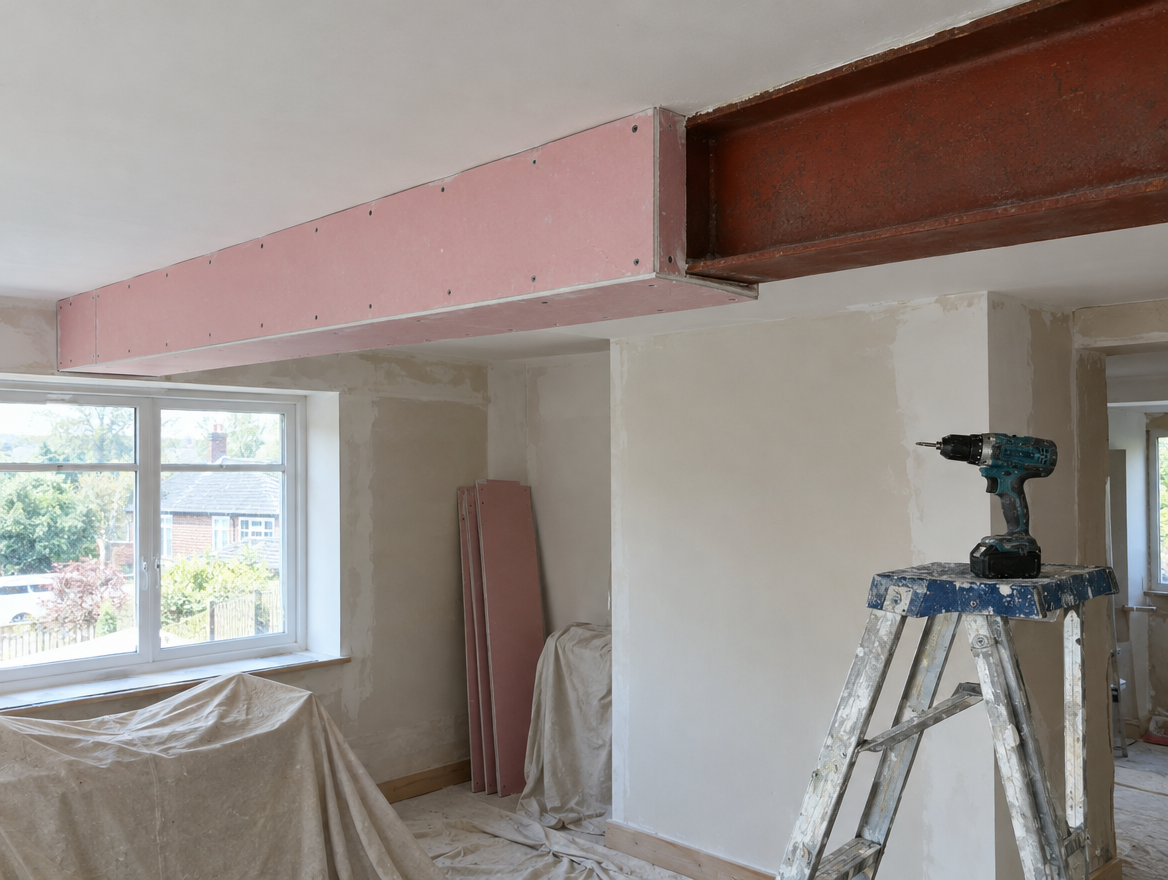
Fire-rated boarding or intumescent coating for structural steel, to the fire resistance building control requires.
- Free survey visit and itemised written quote
- Calculations and building control arranged
- Around a day per beam for boxing, or several days for an intumescent coating to build up and dry
- Free survey visit
- Engineer's calculations arranged
- Building control handled
- Fixed written price once scope is agreed
- England, Wales, mainland Scotland & NI
What is fire protection for steel beams?
Fire protection for steel beams is the layer of fire-rated board or intumescent coating applied to structural steel so it keeps its strength long enough in a fire for people to get out. Steel softens as it heats, so building regulations set a period of fire resistance for beams and columns, and the protection is chosen and applied to meet that period.
A bare steel beam is strong at room temperature but loses much of its load-carrying capacity once it gets hot enough in a fire. If that beam holds up a floor or the walls above, it matters to everyone in the building. Fire protection slows the rate at which the steel heats up, buying time for people to get out safely.
We fit fire protection alongside new steelwork, and as a standalone job where steel was installed without it or building control has asked for more. That covers boxing with fire-rated plasterboard, intumescent coatings for steel left on show, and the records building control needs to see before signing the work off.
When is it needed?
- A new steel beam or column has been fitted in a house
- Building control has flagged unprotected steel at inspection
- Steel left exposed for looks needs an intumescent coating
- Older steel found during a sale survey has no protection
- A loft or flat conversion changes the fire standard the steel must meet
- Timing
- Around a day per beam for boxing, or several days for an intumescent coating to build up and dry
- Building control
- Needed
- Party wall
- Rarely needed
- Guide price
- £150–£600 per beam

Our process
How is fire protection for steel beams carried out?
Check the specification
We read the engineer's calculations and the building control requirements to confirm what period of fire resistance each beam and column needs, and whether any of the steel is already protected.
Choose the method
Boxing with fire-rated plasterboard suits steel that will be hidden. An intumescent coating suits steel you want on show. Some jobs mix the two, with columns painted and beams boxed.
Prepare the steel
For boarding, a light timber or metal frame is fixed around the section. For coatings, the surface is cleaned, any rust is dealt with and a compatible primer is confirmed or applied first.
Apply the protection
Boards are fixed in the layers and with the fixings the system calls for, with joints staggered and taped. Coatings are built up coat by coat to the dry film thickness in the specification.
Measure and record
Coating thickness is checked with a gauge, and board layers are photographed before they are closed up. These records show building control what has gone in once it is hidden from view.
Finish and sign-off
Boxing is beaded and skimmed ready to paint, and coated steel gets its decorative top coat. Building control checks the protection as part of the final visit before issuing the completion certificate.
Before you start
What should I know about fire protection for steel beams?
- Steel does not burn, but it loses stiffness and strength as it heats. Protection is there to keep the temperature of the beam down for a set period, so the floor or walls it carries stay up while people leave.
- The fire resistance needed depends on the building and where the steel sits. In a typical two-storey house, elements of structure commonly need 30 minutes, but taller homes, flats and commercial premises can need more. The engineer and building control confirm the figure.
- Building control treats fire protection as part of the structural approval, not an optional extra. If unprotected steel is found at inspection, the completion certificate is normally held back until the protection is in place and has been checked.
- Fire-rated plasterboard is denser than standard board and contains additives that slow the passage of heat. It usually has a pink or red face, and the number of layers and fixing pattern come from the system specification rather than being decided on site.
- Intumescent paint looks like an ordinary coating but swells into a thick insulating char when heated. How well it performs depends on the dry film thickness, which varies with the steel section and fire period, so it is applied to a written specification.
- Exposed steel is popular in open-plan kitchens and loft spaces. An intumescent system can take a decorative top coat in most colours, although up close the finish has a slightly textured look compared with steel painted in a factory.
- A common fault is applying intumescent paint over the wrong primer, or over one of unknown type. The products must be compatible, so where steel was primed long ago the primer is identified or the surface is cleaned back before coating.
- Older homes sometimes have steel fitted decades ago with no protection at all, or boxed in ordinary timber and hardboard. When this turns up during other work, we can check what is there and price protection to suit today's requirements.
- Fire boarding should not be cut into casually later on. Downlights, cables and pipes pushed through the boxing can weaken it, so services are planned before boarding, and any openings are sealed with suitable fire-stopping materials.
- Boxing a single beam usually takes around a day, plus skimming and drying. Intumescent coatings need each coat to dry before the next goes on, so they can take several days depending on the thickness required and the room temperature.
- Boarding is fairly clean work, but coatings need a clean, dry and well-ventilated room at a suitable temperature. Dust from other trades can spoil the surface, so painting is normally scheduled once the messy work in that room is finished.
- Boxing is generally the lower-cost route for steel that will be hidden. Intumescent coatings cost more because of the product and the number of coats, and the price rises with the fire period and the size of the section.
- Keep a record of what was fitted: the board type and number of layers, or the coating product, thickness readings and number of coats. Building control may ask for it, and it helps answer queries when the house is sold.
- Damaged boxing or chipped intumescent paint should be repaired properly, not patched with ordinary filler. Small chips in a coating can usually be touched up with the same system, while a dented or holed box may need that board section replaced.
Costs
How much does fire protection for steel beams cost?
| Job | Typical guide range | What it usually covers |
|---|---|---|
| Fire protection to a steel beam | £150–£600 per beam | Fire-rated board boxing or an intumescent coating system as specified |
Rounded guide ranges including VAT, from published UK cost guides (mainly 2024–2026) and our own costings. Your fixed price follows a survey and the engineer's calculations. Sources and notes.
What changes the price?
- Period of fire resistance required
- Boxing with board or an intumescent coating
- Size, shape and number of steel sections
- Whether the existing primer is compatible or the steel needs cleaning back
- Access, height and working space around the steel
- Standard of decorative finish on exposed steel
Approvals
What approvals does fire protection for steel beams need in each nation?
Building control confirms the fire resistance the steel needs under Approved Document B and checks the protection as part of the structural approval.
England rulesThe Welsh Approved Document B sets fire resistance for elements of structure; building control confirms what your beam needs.
Wales rulesStandard 2.3 requires the structure to keep its load-bearing capacity in a fire, and the building warrant covers the protection specified.
Scotland rulesPart E and Technical Booklet E set fire resistance for the structure, and council building control confirms what is needed.
Northern Ireland rulesFire protection for steel beams questions
Does a steel beam in a house need fire protection?
Usually, yes. Where a steel beam or column holds up part of the structure, building regulations normally require it to resist fire for a set period, commonly 30 minutes in a typical house. Building control confirms what is needed for your property, and the protection is checked before the work is signed off.
What is intumescent paint for steel beams?
Intumescent paint is a fire-protective coating that swells when heated, forming a thick insulating layer that slows the steel heating up. It lets you leave a beam on show while still meeting fire requirements. It must be applied at a specified thickness over a compatible primer, so it goes on to a written specification rather than like ordinary paint.
Can I box in a steel beam with normal plasterboard?
Not where fire protection is required. Standard plasterboard is not designed to protect steel for a set period in a fire. Fire-rated plasterboard is used instead, fixed in the number of layers and with the fixings the system specifies, so the boxing performs as intended and passes when building control checks it.
Is boxing in a steel beam cheaper than intumescent paint?
Usually, yes. Boxing with fire-rated plasterboard tends to cost less for steel that will be hidden. Intumescent coatings generally cost more because of the product and the number of coats needed, but they let the beam stay visible. Where either method would work, both can be priced on the itemised quote so you can compare.
How thick does intumescent paint need to be on a steel beam?
There is no single figure. The thickness depends on the steel section, how many sides are exposed and the fire period required, and the coating manufacturer's data sets the dry film thickness for each case. The applied thickness is measured with a gauge once the coats have dried and recorded for building control.
Will building control check the fire protection on my beam?
Yes. Building control looks at fire protection as part of the structural work, normally at or before the final inspection. For boxing they may want to see the board before it is skimmed, and for coatings they may ask for the product details and thickness readings. We keep these records ready for them.
My steel beam was fitted years ago without fire protection. What should I do?
Have it looked at and protected to current requirements. Unprotected steel can raise questions when you sell, and if the original work was never approved, a regularisation application to building control may be needed in England and Wales. We can survey the steel and price both the protection and the paperwork route.
Can I put downlights in a boxed-in steel beam?
Only with planning. Cutting holes in fire boarding can weaken its protection, so any lights in or near the boxing need to be designed in, using fire-rated fittings or suitable fire-stopping where the board is pierced. It is far easier to sort this out before the boxing goes up than to adapt it afterwards.
Does a steel column need fire protection as well as the beam?
Usually, if the column is part of the load path. A column carrying a beam is just as important in a fire, so it normally needs the same fire resistance. Columns are often boxed with board or coated with intumescent paint, and the engineer's design and building control confirm what applies to yours.
How long does intumescent paint take to apply?
Several days in most cases. Each coat has to dry before the next is applied, and the number of coats depends on the thickness needed. Cold or damp rooms slow drying, so the space is kept warm and ventilated, and the top coat goes on once the full build has been measured.
Related services
RSJ installation
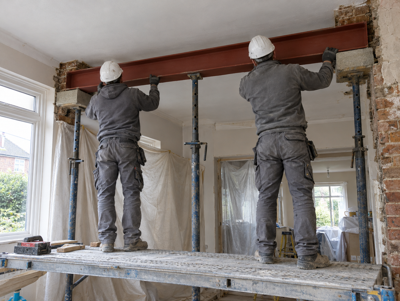
Supply and fit of RSJs and steel beams made to the engineer's design, delivered, lifted in and packed to bear.
From £800Learn more
Building control sign-off
Applications, inspections and the completion certificate for your steel beam work, handled from start to finish.
From £250Learn more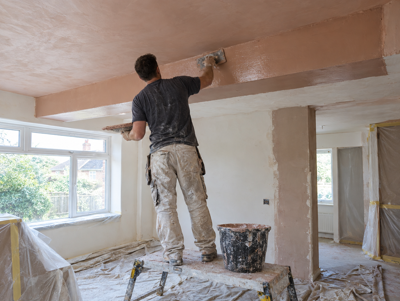
Plastering & making good
Box, bead and skim new steelwork and repair ceilings, walls and floors so rooms are ready to decorate.
From £300Learn more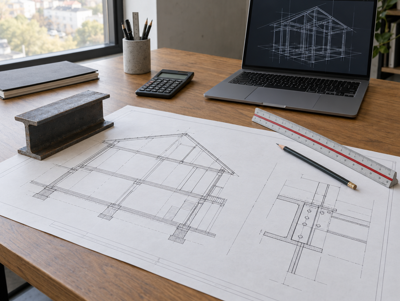
Structural calculations
Engineer's calculations and drawings for your beam, padstones and propping, ready for building control.
From £250Learn more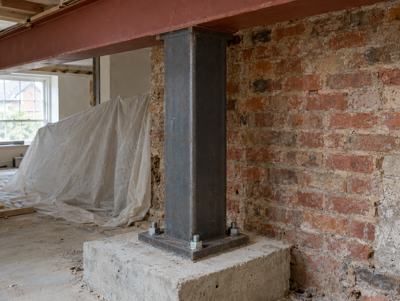
Steel columns & posts
Slim steel columns that carry a beam or floor down to its own foundation, for open layouts and weak walls.
From £500Learn more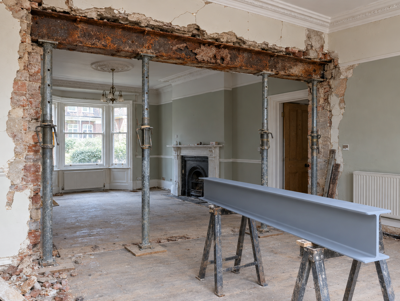
Steel beam replacement & repair
Assess, strengthen or replace a corroded, sagging or undersized steel beam, with the engineer deciding the fix.
From £2,000Learn moreWhere do we offer fire protection for steel beams?
Choose your county, council area or region for local details, building control contacts and guide prices.
England
- Bedfordshire
- Berkshire
- Bristol
- Buckinghamshire
- Cambridgeshire
- Cheshire
- Cornwall
- County Durham
- Cumbria
- Derbyshire
- Devon
- Dorset
- East Riding of Yorkshire
- East Sussex
- Essex
- Gloucestershire
- Greater Manchester
- Hampshire
- Herefordshire
- Hertfordshire
- Isle of Wight
- Kent
- Lancashire
- Leicestershire
- Lincolnshire
- London
- Merseyside
- Norfolk
- North Yorkshire
- Northamptonshire
- Northumberland
- Nottinghamshire
- Oxfordshire
- Rutland
- Shropshire
- Somerset
- South Yorkshire
- Staffordshire
- Suffolk
- Surrey
- Tyne and Wear
- Warwickshire
- West Midlands
- West Sussex
- West Yorkshire
- Wiltshire
- Worcestershire
Wales
- Anglesey
- Blaenau Gwent
- Bridgend
- Caerphilly
- Cardiff
- Carmarthenshire
- Ceredigion
- Conwy
- Denbighshire
- Flintshire
- Gwynedd
- Merthyr Tydfil
- Monmouthshire
- Neath Port Talbot
- Newport
- Pembrokeshire
- Powys
- Rhondda Cynon Taf
- Swansea
- Torfaen
- Vale of Glamorgan
- Wrexham
Scotland
- Aberdeen
- Aberdeenshire
- Angus
- Argyll and Bute
- Clackmannanshire
- Dumfries and Galloway
- Dundee
- East Ayrshire
- East Dunbartonshire
- East Lothian
- East Renfrewshire
- Edinburgh
- Falkirk
- Fife
- Glasgow
- Highlands
- Inverclyde
- Midlothian
- Moray
- North Ayrshire
- North Lanarkshire
- Perth and Kinross
- Renfrewshire
- Scottish Borders
- South Ayrshire
- South Lanarkshire
- Stirling
- West Dunbartonshire
- West Lothian
Northern Ireland