
New & wider openings
Lintel replacement
Replace a cracked, sagging or rotten lintel over a window or door, with the brickwork propped and rebuilt to match.
- Free survey visit and itemised written quote
- Calculations and building control arranged
- 1–2 working days on site per opening in most homes, longer where scaffolding or extensive brick matching is needed
- Free survey visit
- Engineer's calculations arranged
- Building control handled
- Fixed written price once scope is agreed
- England, Wales, mainland Scotland & NI
What is lintel replacement?
Lintel replacement is the removal of a failed beam above a window, door or other opening and its replacement with a new lintel specified by a structural engineer. The masonry above is held on temporary supports while the old lintel comes out, the new one is bedded level on sound bearings, and the brickwork and plaster around it are rebuilt and made good.
A lintel is the short beam that carries the brickwork over a window or door. When it fails, the signs tend to show outside first: a crack stepping up from the corner of the frame, a dip in the brick courses, or a window that has started to bind. Timber, concrete and old steel lintels each fail in their own way, but the fix follows the same principle.
We survey the opening, arrange the engineer's specification and building control, prop the wall, swap the lintel and rebuild the masonry and plaster around it. Your quote is written and itemised, and it covers matching the bricks and mortar as closely as the existing wall allows.
When is it needed?
- Cracks running diagonally up from the corners of a window or door
- Brick courses dipping or bowing above an opening
- A rotten timber lintel found behind a brick arch or render
- A concrete lintel with rust stains, flaking faces or exposed reinforcement
- New windows going in and the old lintel found to be failed or missing
- Timing
- 1–2 working days on site per opening in most homes, longer where scaffolding or extensive brick matching is needed
- Building control
- Needed
- Party wall
- Rarely needed
- Guide price
- £400–£1,200 per lintel

Our process
How is lintel replacement carried out?
Opening inspection
We look at the cracking inside and out, check what the existing lintel is made of where it can be seen, and note the wall type, the frame, and anything fixed above such as a bay roof, alarm box or outside light.
Specification and approval
The engineer specifies the replacement lintel and any changes to the bearings, allowing for the wall construction, what sits above and whether the wall is solid or cavity. Building control is notified before any work starts.
Supporting the wall
Holes are cut through mortar joints above the opening for needles or masonry prop heads, and adjustable steel props take the brickwork. If the frame stays in, it is protected and checked so it is not left carrying the wall.
Old lintel out
Brickwork directly over the failed lintel is taken down where needed, with bricks cleaned and set aside for reuse. The old lintel is then cut or eased out without disturbing the masonry either side of the opening.
New lintel bedded
The new lintel goes in level on mortar at each end, with a cavity tray and weep vents in cavity walls so water drains outwards. The brickwork above is rebuilt in matching bond and a mortar suited to the wall.
Props out and finishing
Once the mortar has gained strength the props come out and the needle holes are filled and pointed. Inside, cracked plaster around the head and reveals is cut back and made good, ready for building control's final visit.
Before you start
What should I know about lintel replacement?
- Diagonal cracks that start at the top corners of a window and step up through the mortar joints are a classic sign of a lintel problem. Movement elsewhere in a house can cause similar cracks, so the cause is confirmed on site before anything is replaced.
- Many Victorian and Edwardian houses have a timber lintel hidden behind a decorative brick arch or on the inner face of the wall. Damp from leaking gutters or failed pointing can rot it unseen until the brickwork above starts to drop.
- Concrete lintels fail when the steel reinforcement inside rusts and swells, pushing off the concrete face. Rust staining, flaking edges and exposed bars are the warning signs, and once that process is well under way an engineer will often recommend replacement over patching.
- Older steel lintels and bare steel angles can corrode where water sits on them. Rust takes up more room than the steel it comes from, so a corroding lintel can lift the brick course above it and open up horizontal cracks.
- The replacement is specified by a structural engineer, who looks at the opening width, the wall construction and what the lintel carries, such as floor joists, a bay roof or a gable. Solid walls and cavity walls usually call for different lintel types.
- Replacing a structural lintel is generally treated as building work, so approval is in place before it starts. In England, Wales and Northern Ireland that means building control, and in Scotland a building warrant is needed before structural work begins.
- While the old lintel is out, the brickwork above sits on adjustable steel props with needles or masonry prop heads fixed through the mortar joints. The props stand on boards or spreaders so their load is shared across the ground or floor beneath.
- Windows and doors can often stay in place during a lintel replacement, keeping the house secure and weathertight. Where a frame has been carrying sagging brickwork for some time, it may need adjusting or replacing once the new lintel takes the load.
- In cavity walls, a cavity tray and weep vents above the lintel send any water in the cavity back outside. Missing trays are a frequent cause of damp patches above window heads, so they are fitted as part of the replacement.
- Bricks taken down are cleaned and reused where possible, and any shortfall is made up with reclaimed or close-matching bricks. Mortar is mixed to suit the colour and strength of the existing wall, which in older homes often means a lime mortar.
- Bay windows often rely on a timber beam, sometimes called a bressummer, across the front of the bay. When it rots, the bay roof and the brickwork over it can drop, and the engineer may specify a steel replacement instead.
- Cables for outside lights, burglar alarms and doorbells often run just above window and door heads. These are noted at the survey and made safe by an electrician before the brickwork is opened up, then reinstated afterwards.
- Ground-floor lintels can usually be replaced from the ground with props alone. Openings on upper floors need scaffolding or a tower, which adds time and cost but also gives a safe, stable platform for rebuilding the brickwork neatly.
- A typical single lintel takes a day or two on site. Keep the building control completion certificate with your property papers, because buyers' surveyors often notice old cracking around openings and their solicitors will ask what was done about it.
Costs
How much does lintel replacement cost?
| Job | Typical guide range | What it usually covers |
|---|---|---|
| Lintel replacement | £400–£1,200 per lintel | Propping, removing the old lintel, new lintel set on beds and brickwork made good |
| Temporary works and propping | £150–£500 | Props, spreaders, needles and sole plates for a typical opening, installed and struck |
| Widening an internal doorway | £1,000–£2,500 | Opening widened with a new lintel or short beam, approval where structural, and making good |
Rounded guide ranges including VAT, from published UK cost guides (mainly 2024–2026) and our own costings. Your fixed price follows a survey and the engineer's calculations. Sources and notes.
What changes the price?
- Width of the opening and what the lintel carries
- Solid or cavity wall construction
- Ground-floor or upper-floor opening, and any scaffolding needed
- Amount of brickwork to take down and rebuild
- Sourcing matching bricks and mortar
- Internal plastering and making good around the opening
Approvals
What approvals does lintel replacement need in each nation?
Lintel replacement is structural work needing building regulations approval (building notice or full plans) from council building control or a registered building control approver.
England rulesApproval under the Building Regulations as they apply in Wales is needed before work starts. For work started or approved from 1 July 2026 that means an application to the council or a registered building control approver, dutyholders appointed in writing and a commencement notice.
Wales rulesA building warrant from the council's building standards service must be granted before work starts, and a completion certificate submitted at the end. There is no Party Wall Act; title deeds and, for flats, the Tenements (Scotland) Act 2004 apply.
Scotland rulesA full plans application or building notice goes to the council's building control under the Building Regulations (Northern Ireland) 2012 before work begins. Northern Ireland has no Party Wall Act; title deeds and the general law apply.
Northern Ireland rulesLintel replacement questions
How do I know if my lintel needs replacing?
Look for diagonal cracks rising from the top corners of a window or door, brick courses that dip over the opening, rust staining or flaking on a concrete lintel, and frames that have started to stick. Any of these is worth having checked, as the cause needs confirming on site before a replacement is planned.
Do I need building regulations approval to replace a lintel?
Usually yes, because a lintel is a structural element and replacing it is generally treated as building work. In England and Wales building control is notified or approved first, Scotland needs a building warrant before structural work starts, and Northern Ireland needs an application to council building control. We deal with this as part of the job.
Can a lintel be replaced without removing the window?
Often, yes. The brickwork above is propped, the old lintel is taken out and the new one fitted while the frame stays in place under protection. If the frame has been carrying weight because the old lintel sagged, it may need easing or adjusting once the new lintel is in.
How long does lintel replacement take?
Most single openings take one to two working days on site, covering propping, removing the old lintel, fitting the new one and rebuilding the brickwork. Upper-floor lintels needing scaffolding, wide bay windows, and jobs where bricks must be sourced to match can all take longer.
What type of lintel will be fitted?
The engineer decides, based on the opening width, the wall construction and the load above. Steel lintels are common in cavity walls, while solid walls or wide openings may suit a different type or a steel section. We fit what the specification calls for rather than a one-size option.
Why is my concrete lintel cracking and flaking?
Usually because the steel reinforcement inside has rusted. Rust takes up more space than steel, so it pushes the concrete cover off, exposing more steel to damp and speeding up the damage. An engineer checks whether the lintel can still do its job, but in many cases replacement is the sensible fix.
Will the new brickwork match the old?
We aim for a close match by reusing the original bricks wherever they come out cleanly and sourcing reclaimed or similar bricks for any shortfall. Mortar colour and type are chosen to suit the existing wall. New work can look slightly fresher at first and tends to weather in over time.
Can a timber lintel in an old house be replaced with steel or concrete?
Yes, where the engineer is satisfied it suits the wall. Timber lintels in older solid-walled homes are often swapped for a steel or concrete alternative that will not rot. The engineer considers how the wall is built, and where lime mortar is present the rebuild uses a compatible mortar.
Do I need scaffolding to replace a lintel?
For ground-floor windows and doors, usually not, as props and a stable platform from the ground are enough. First-floor and higher openings normally need scaffolding or a tower so the brickwork can be rebuilt safely, and that cost appears as its own line in the quote.
Is a cracked lintel dangerous?
It can become a problem if left, because the masonry above loses support and cracks tend to widen as it settles. Failure is usually gradual, but if bricks are loose, a frame is distorting or cracks are growing quickly, have it checked promptly and keep people clear of the area.
Related services
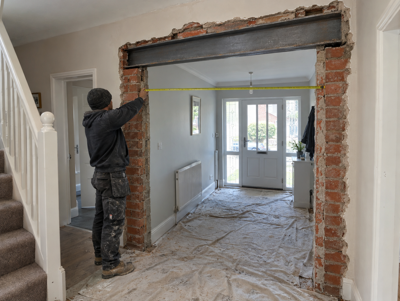
Wider doorways & openings
Widen an internal doorway or form a new opening, with a lintel or steel beam specified by an engineer.
From £1,000Learn more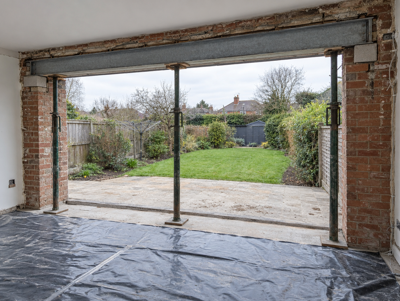
Bi-fold & sliding door openings
Form a wide opening in an outside wall for bi-fold or sliding doors, on steel designed to suit glazing.
From £2,500Learn more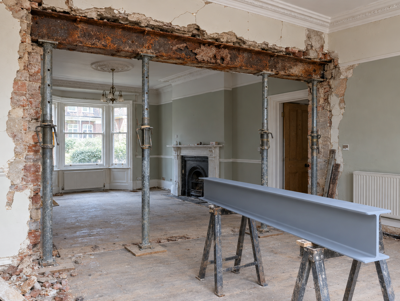
Steel beam replacement & repair
Assess, strengthen or replace a corroded, sagging or undersized steel beam, with the engineer deciding the fix.
From £2,000Learn more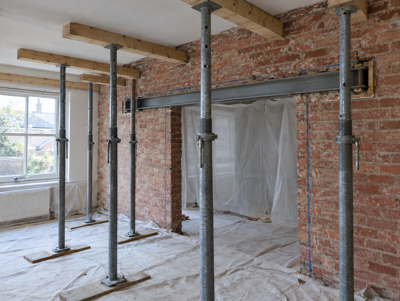
Temporary works & propping
Props, needles and spreaders that hold the building up safely while walls come out and steel goes in.
From £150Learn more
Structural calculations
Engineer's calculations and drawings for your beam, padstones and propping, ready for building control.
From £250Learn more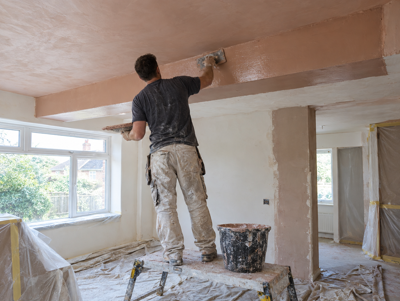
Plastering & making good
Box, bead and skim new steelwork and repair ceilings, walls and floors so rooms are ready to decorate.
From £300Learn moreWhere do we offer lintel replacement?
Choose your county, council area or region for local details, building control contacts and guide prices.
England
- Bedfordshire
- Berkshire
- Bristol
- Buckinghamshire
- Cambridgeshire
- Cheshire
- Cornwall
- County Durham
- Cumbria
- Derbyshire
- Devon
- Dorset
- East Riding of Yorkshire
- East Sussex
- Essex
- Gloucestershire
- Greater Manchester
- Hampshire
- Herefordshire
- Hertfordshire
- Isle of Wight
- Kent
- Lancashire
- Leicestershire
- Lincolnshire
- London
- Merseyside
- Norfolk
- North Yorkshire
- Northamptonshire
- Northumberland
- Nottinghamshire
- Oxfordshire
- Rutland
- Shropshire
- Somerset
- South Yorkshire
- Staffordshire
- Suffolk
- Surrey
- Tyne and Wear
- Warwickshire
- West Midlands
- West Sussex
- West Yorkshire
- Wiltshire
- Worcestershire
Wales
- Anglesey
- Blaenau Gwent
- Bridgend
- Caerphilly
- Cardiff
- Carmarthenshire
- Ceredigion
- Conwy
- Denbighshire
- Flintshire
- Gwynedd
- Merthyr Tydfil
- Monmouthshire
- Neath Port Talbot
- Newport
- Pembrokeshire
- Powys
- Rhondda Cynon Taf
- Swansea
- Torfaen
- Vale of Glamorgan
- Wrexham
Scotland
- Aberdeen
- Aberdeenshire
- Angus
- Argyll and Bute
- Clackmannanshire
- Dumfries and Galloway
- Dundee
- East Ayrshire
- East Dunbartonshire
- East Lothian
- East Renfrewshire
- Edinburgh
- Falkirk
- Fife
- Glasgow
- Highlands
- Inverclyde
- Midlothian
- Moray
- North Ayrshire
- North Lanarkshire
- Perth and Kinross
- Renfrewshire
- Scottish Borders
- South Ayrshire
- South Lanarkshire
- Stirling
- West Dunbartonshire
- West Lothian
Northern Ireland