
Design & approvals
Party wall beam works
Beams bearing into a shared wall, with party wall notices arranged through a surveyor before work starts.
- Free survey visit and itemised written quote
- Calculations and building control arranged
- At least two months' notice before work starts in England and Wales, unless the neighbour agrees in writing to an earlier start
- Free survey visit
- Engineer's calculations arranged
- Building control handled
- Fixed written price once scope is agreed
- England, Wales, mainland Scotland & NI
What are party wall beam works?
Party wall beam works are building jobs where a steel beam or padstone is set into a wall shared with a neighbour. In England and Wales, cutting into a party wall to take a beam's bearing is notifiable under the Party Wall etc. Act 1996, so notice must be served on the adjoining owner before work begins.
In terraced and semi-detached homes, the most obvious place for a new beam to bear is often the wall you share with next door. That wall belongs partly to your neighbour, so in England and Wales the law sets out a process for telling them, recording the condition of their side and settling any disagreement before the steel goes in.
We plan the structural work around that process. Where notices are needed, we arrange them through a party wall surveyor and build the notice period into the programme. We do not give legal advice, but we make sure the beam design, calculations and method statement are ready for the surveyors to check.
When is it needed?
- Knock-throughs in terraced and semi-detached houses where the beam lands on the shared wall
- Loft conversion steels bearing onto the party wall
- Cutting pockets for padstones into a shared wall
- Side return and rear extensions with steels at the boundary
- Removing a chimney breast built against the party wall
- Timing
- At least two months' notice before work starts in England and Wales, unless the neighbour agrees in writing to an earlier start
- Building control
- Needed
- Party wall
- Often needed (E&W)
- Guide price
- £900–£2,000 per neighbour

Our process
How are party wall beam works carried out?
Check whether the Act applies
At the survey we identify which walls are shared and where the beam ends could bear. If the design puts a bearing, padstone or other cutting into a party wall in England or Wales, the Party Wall etc. Act 1996 is likely to apply.
Engineer's design for the surveyors
The structural engineer prepares calculations and drawings showing the bearing details and how the wall will be cut and propped. Clear information at this stage makes the surveyors' job easier and reduces queries later.
Notices served
A party wall surveyor prepares and serves a party structure notice on each adjoining owner at least two months before the work is due to start. The notice describes the work and includes the relevant drawings.
Consent or dissent
The neighbour can consent in writing or dissent. If they dissent, or do not reply within the time allowed, surveyors are appointed, either one agreed surveyor or one for each side, to settle the matter.
Schedule of condition and award
The surveyors usually record the condition of the neighbour's property before work, then publish a party wall award setting out how, when and under what conditions the work may be done.
Work and final check
The beam goes in following the award and the engineer's design. Afterwards the surveyors may revisit to compare the neighbour's property against the schedule of condition and deal with any damage.
Before you start
What should I know about party wall beam works?
- A party wall is usually the wall dividing two attached homes, such as the wall between terraced or semi-detached houses. Garden walls straddling the boundary are party fence walls, but for beam work it is the main separating wall between the houses that usually matters.
- Cutting into a party wall to take the bearing of a beam is notifiable work under the Party Wall etc. Act 1996. So is cutting away projections attached to the wall, such as chimney breasts, which often comes up during knock-throughs.
- A party structure notice must be served at least two months before the work starts. That lead time is easy to overlook, so we build it into the programme from the first visit rather than discovering it when the steel is ready.
- An adjoining owner can consent in writing, dissent, or serve a counter-notice asking for extra works to suit them. Silence after the response period is treated as a dissent, which simply means surveyors are appointed to agree how the work proceeds.
- If there is a dissent, the owners can appoint one agreed surveyor to act impartially for both, or a surveyor each. Either way, the surveyors' role under the Act is to resolve the dispute fairly, not to act as advocates for one side.
- A schedule of condition records the neighbour's side of the wall before work begins, usually with written notes and photographs of existing cracks and finishes. It gives both sides a fair reference point if anyone later claims the work caused damage.
- The party wall award is the document the surveyors produce to settle the dispute. It sets out the work allowed, working hours and methods, access arrangements and how any damage will be dealt with, and both owners are bound by it unless it is appealed.
- Surveyors' fees under the Act are normally the responsibility of whoever is having the work done. Costs rise with the number of adjoining owners, whether each appoints their own surveyor, and how much checking the beam design and method need.
- Cutting a pocket into a shared wall needs care, because the wall also supports the neighbour's floors and roof. The engineer specifies how the pocket is formed and packed, and props or needles may be needed to keep both houses supported while it is cut.
- Cutting into a party wall is noisy on both sides and can disturb loose plaster or pictures next door. Telling the neighbour the dates in advance, protecting their side where access is agreed, and keeping to agreed hours all help the work go smoothly.
- Party walls in older terraces are often solid brick with lime mortar, and may carry both houses' chimney flues. The engineer checks the wall's condition and thickness where the beam will bear, and the bearing position may be adjusted to avoid flues still in use.
- Scottish homes are outside the Party Wall Act altogether. Who owns and maintains a mutual wall is set by the title deeds and common law, with the Tenements (Scotland) Act 2004 covering flats, and structural work still needs a building warrant first.
- Northern Ireland also has no Party Wall Act. Rights over a shared wall depend on the title deeds and the general law, so talking to the neighbour early is sensible, and council building control must be applied to before structural work starts.
- Keep the notices, any written consent, the schedule of condition and the award with your building control certificate. A buyer's solicitor may ask whether party wall procedures were followed, and these documents answer that. For legal questions, a solicitor or the surveyor is the right adviser.
Costs
How much do party wall beam works cost?
| Job | Typical guide range | What it usually covers |
|---|---|---|
| Party wall surveyor (agreed surveyor, per neighbour) | £900–£2,000 per neighbour | Schedule of condition and award where a neighbour dissents; serving notice alone, where the neighbour consents, costs far less (England and Wales only) |
| Structural calculations for a beam | £250–£750 | Site measure or photos, beam and padstone design and calculations for building control |
| Building control fees | £250–£650 | Building notice or full plans fee and inspections; varies by council or approver |
Rounded guide ranges including VAT, from published UK cost guides (mainly 2024–2026) and our own costings. Your fixed price follows a survey and the engineer's calculations. Sources and notes.
What changes the price?
- Number of adjoining owners who need notices
- Whether neighbours consent or surveyors are appointed
- One agreed surveyor or a surveyor for each side
- Complexity of the beam bearings and cutting into the wall
- Schedules of condition and any follow-up visits
- Propping needed to support both properties during the work
Approvals
What approvals do party wall beam works need in each nation?
The Party Wall etc. Act 1996 applies: a party structure notice at least two months before work, with surveyors appointed if a neighbour dissents or does not reply within 14 days.
England rulesThe Party Wall etc. Act 1996 applies in Wales too, with the same notices, periods and surveyor process as in England.
Wales rulesThere is no Party Wall Act. Title deeds and the general law apply, and for flats the Tenements (Scotland) Act 2004 protects support and shelter. This service is offered in England and Wales only.
Scotland rulesThere is no Party Wall Act. Title deeds and the general law apply, so take legal advice and agree the work in writing. This service is offered in England and Wales only.
Northern Ireland rulesParty wall beam works questions
Do I need a party wall agreement to put a steel beam in?
Yes, in England and Wales, if the beam will bear into a wall you share with a neighbour. Notice is required under the Party Wall etc. Act 1996, and the neighbour may consent in writing or dissent, in which case surveyors produce a party wall award. Scotland and Northern Ireland have no equivalent Act.
How much notice do I need to give my neighbour?
At least two months for a party structure notice, which is the notice needed for cutting into a party wall to take a beam. The neighbour can agree in writing to an earlier start, but that cannot be assumed. Building the notice period into the programme early stops it delaying the rest of the job.
What happens if my neighbour dissents?
A dissent means surveyors are appointed to settle how the work goes ahead; it does not mean the work is refused. The owners either agree on one surveyor or appoint one each. The surveyors usually prepare a schedule of condition of the neighbour's property and publish an award setting out how and when the beam can be fitted.
Who pays for the party wall surveyor?
Normally the building owner, meaning the person having the work done, pays the reasonable fees of the surveyors for both sides, because the work is for their benefit. Fees vary with the number of neighbours affected and the complexity of the work, which is why they sit as a separate item in our quote.
Can my neighbour stop me putting a beam in the party wall?
Generally no. The Party Wall etc. Act 1996 gives the building owner the right to carry out notifiable work, such as cutting in a beam bearing, provided the proper procedure is followed. A neighbour can dissent, which leads to surveyors setting conditions in an award, but this regulates the work rather than preventing it. Take legal advice on specific disputes.
What is a schedule of condition?
A schedule of condition is a written and photographic record of the neighbour's property, focused on the rooms next to the party wall, made before work starts. It notes existing cracks, stains and finishes. If damage is alleged later, the surveyors compare the property with the schedule to see what changed during the work.
Do party wall rules apply in Scotland?
No. The Party Wall etc. Act 1996 covers England and Wales only. In Scotland, rights and responsibilities for a shared wall come from the title deeds and common law, and in flats from the Tenements (Scotland) Act 2004. A building warrant must still be granted before any structural beam work begins.
What if work starts without serving a party wall notice?
The neighbour can seek a court injunction to stop the work until the proper procedure is followed, and starting without notice weakens the building owner's position if damage is later disputed. It can also cause problems when either property is sold. We do not start notifiable party wall work until the notice process is complete.
Does a loft conversion beam need a party wall notice?
Often, yes. Loft conversion steels in terraced and semi-detached houses commonly bear into the party wall, and cutting pockets for them is notifiable in England and Wales. Raising the party wall, for example for a hip-to-gable conversion, can also be notifiable. Notices are served through a party wall surveyor before the loft work starts.
Can you serve party wall notices for me?
Yes, we arrange notices through a party wall surveyor as part of the job where they are needed. The surveyor prepares and serves the correct notice with the drawings, handles the neighbour's response and, if needed, takes part in the process that leads to an award. We coordinate the timing with the build but do not give legal advice ourselves.
Related services
Building control sign-off
Applications, inspections and the completion certificate for your steel beam work, handled from start to finish.
From £250Learn more
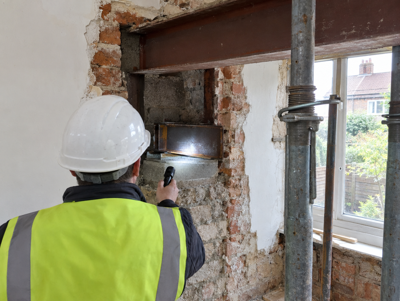
Through-lounge knock-throughs
Join front and back reception rooms into one through-lounge, with steel, approvals and period finishes handled.
From £2,500Learn more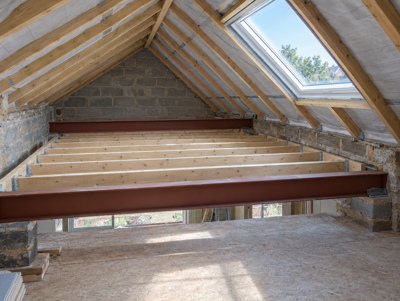
Loft conversion steels
Steel beams to carry a new loft floor, dormer and roof loads, designed, lifted in and bedded on padstones.
From £2,500Learn more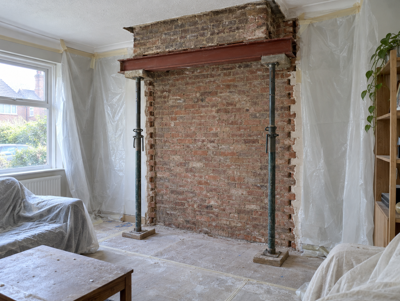
Chimney breast removal
Remove a chimney breast to gain floor space, with anything left above supported to the engineer's design.
From £1,500Learn more
Side return extension steels
Steel beams and columns to infill the side return of a terraced house and open the back rooms into one space.
From £3,500Learn more
Structural calculations
Engineer's calculations and drawings for your beam, padstones and propping, ready for building control.
From £250Learn moreWhere do we offer party wall beam works?
Choose your county, council area or region for local details, building control contacts and guide prices.
England
- Bedfordshire
- Berkshire
- Bristol
- Buckinghamshire
- Cambridgeshire
- Cheshire
- Cornwall
- County Durham
- Cumbria
- Derbyshire
- Devon
- Dorset
- East Riding of Yorkshire
- East Sussex
- Essex
- Gloucestershire
- Greater Manchester
- Hampshire
- Herefordshire
- Hertfordshire
- Isle of Wight
- Kent
- Lancashire
- Leicestershire
- Lincolnshire
- London
- Merseyside
- Norfolk
- North Yorkshire
- Northamptonshire
- Northumberland
- Nottinghamshire
- Oxfordshire
- Rutland
- Shropshire
- Somerset
- South Yorkshire
- Staffordshire
- Suffolk
- Surrey
- Tyne and Wear
- Warwickshire
- West Midlands
- West Sussex
- West Yorkshire
- Wiltshire
- Worcestershire
Wales