
Beams, frames & columns
Steel beam replacement & repair
Assess, strengthen or replace a corroded, sagging or undersized steel beam, with the engineer deciding the fix.
- Free survey visit and itemised written quote
- Calculations and building control arranged
- From a day or two for bearing repairs to around a week for a full beam replacement, depending on the engineer's specification
- Free survey visit
- Engineer's calculations arranged
- Building control handled
- Fixed written price once scope is agreed
- England, Wales, mainland Scotland & NI
What is steel beam replacement & repair?
Steel beam replacement and repair means dealing with an existing beam that is corroded, sagging, undersized or poorly supported. A structural engineer inspects it and decides whether it can be repaired, strengthened with welded or bolted plates, given new bearings, or must be taken out and replaced, with the structure propped throughout.
Not every steel beam was put in properly. Some were fitted decades ago without calculations, some sit on crumbling brick or timber packing, and some have rusted where water reached them through a leaking roof, a shopfront or a damp wall. Cracks in the plaster above, doors that stick or a visible dip are common warning signs.
We start with a survey visit, arrange an engineer's inspection, then carry out whatever repair the engineer specifies, from new bearings to strengthening or full replacement. We handle building control and the temporary propping, and you get an itemised written quote before anything starts.
When is it needed?
- A beam that has visibly sagged or deflected
- Rust, flaking or section loss on an exposed or hidden steel
- Cracking in walls or ceilings above an existing beam
- Steel found with no calculations or sign-off during a sale
- Adding a loft conversion or extra storey above an existing beam
- Timing
- From a day or two for bearing repairs to around a week for a full beam replacement, depending on the engineer's specification
- Building control
- Needed
- Party wall
- Sometimes (E&W)
- Guide price
- £2,000–£5,500

Our process
How is steel beam replacement & repair carried out?
Initial look and access
We look at the beam, its ends and the cracks or movement reported, and work out what needs opening up so the steel can be seen. Boxing or plaster may need careful removal at key points.
Engineer's inspection
A structural engineer checks the section, its condition, the bearings and the loads now on it, and reports on the cause. They specify repair, strengthening or replacement, with any propping arrangement.
Approval and preparation
Where the work is structural, building control is notified or approved before it starts, and party wall notices are served if a shared wall is affected. Replacement steel or plates are fabricated to measured sizes.
Propping and opening up
The structure above is propped off the floor below, spreading the load so neither is overloaded. Finishes around the beam are stripped back fully and the ends are exposed where bearings are being rebuilt.
Repair or replacement carried out
Depending on the specification, corroded steel is cleaned and treated, plates are bolted or welded on, padstones are rebuilt, or the old beam is cut out and the new one lifted in and packed tight.
Inspection and reinstatement
Building control inspects the repaired or new steel. Fire protection is reinstated or upgraded as specified, the beam is reboxed, and plaster and decoration are made good to match the surrounding finish.
Before you start
What should I know about steel beam replacement & repair?
- Signs that a beam is struggling include diagonal cracks running up from its ends, a visible dip along its length, doors above that start binding, and rust staining through paint or plaster. Any one of these is worth an engineer's look.
- Many problem beams are not faulty steel at all but poor bearings. Ends resting on loose brick, timber offcuts or no padstone can crush the masonry beneath, and the beam then drops slightly and cracks the finishes above.
- Corrosion usually starts where water reaches the steel: under a leaking flat roof, behind a shopfront fascia, in a damp external wall or at a cellar ceiling. Light surface rust can often be cleaned and treated, while heavy loss of section changes the beam's strength.
- Whether to strengthen or replace is the engineer's decision. Plating, where steel plates are fixed to the flanges, can add capacity without removing the beam, but it is not suitable for every section, connection or level of damage.
- Beams fitted without calculations, whether decades ago or more recently without approval, may be smaller than the loads require, particularly in shop conversions and older knock-throughs. An engineer can check the existing section against the actual loads and say whether it is adequate.
- A proper assessment means opening the boxing at the ends and along the span so the engineer can see the steel. In buildings from before 2000, old boxing can contain asbestos insulating board, so it is checked before anyone cuts into it.
- Replacing a beam that is already carrying load is more delicate than fitting a new one. Props go in on both sides before anything is cut, with spreaders above and below, and the old steel is often cut into sections to lift it out safely.
- Like-for-like repainting needs no approval, but strengthening, rebuilding bearings or replacing a beam is structural work that falls under building control. Where an earlier beam went in without approval, a regularisation application in England and Wales can be used to seek retrospective sign-off.
- Missing paperwork for an old beam often surfaces when a house is being sold and the buyer's surveyor asks for calculations. An engineer's inspection, any remedial work and a regularisation or completion certificate together answer those questions.
- Older beams were often left with no fire protection or boxed in ordinary materials. When a beam is repaired or replaced, the fire protection is brought up to what the engineer and building control specify, commonly fire-rated plasterboard or intumescent paint.
- Shop beams over old shopfronts are a common repair job. They often carry the whole front wall of the upper floors, sit behind fascias where rain gets in, and may have been cut or altered when shopfronts were replaced in the past.
- Repairs are usually more contained than a new opening because the room layout stays the same. The main disruption is stripping the boxing, propping the floor above and the dust from cutting steel, with the ceiling and walls around the beam replastered afterwards.
- A repair only lasts if the cause is dealt with too. A leaking roof, blocked gutter or bridged damp-proof course that rusted the beam needs fixing first, otherwise new protective coatings will break down in the same way.
- The full scope is sometimes clear only once the steel is exposed. We price the inspection and opening up first where needed, then provide an itemised quote for the repair the engineer specifies, so you are not committing to work before the problem is understood.
Costs
How much does steel beam replacement & repair cost?
| Job | Typical guide range | What it usually covers |
|---|---|---|
| Steel beam replacement | £2,000–£5,500 | Propping, removing the failed beam, new steel on proper bearings, approval and making good |
Rounded guide ranges including VAT, from published UK cost guides (mainly 2024–2026) and our own costings. Your fixed price follows a survey and the engineer's calculations. Sources and notes.
What changes the price?
- Extent of corrosion, sagging or damage found once the steel is exposed
- Whether the engineer specifies repair, plating or full replacement
- Condition of the bearings and any padstones to rebuild
- Propping needed to take the load off a working beam
- Access for removing old steel and bringing new sections in
- Fire protection, reboxing and replastering to match existing finishes
Approvals
What approvals does steel beam replacement & repair need in each nation?
Steel beam replacement & repair is structural work needing building regulations approval (building notice or full plans) from council building control or a registered building control approver. Party wall notices may be needed where steel bears into a shared wall.
England rulesApproval under the Building Regulations as they apply in Wales is needed before work starts. For work started or approved from 1 July 2026 that means an application to the council or a registered building control approver, dutyholders appointed in writing and a commencement notice. The Party Wall etc. Act 1996 applies in Wales too.
Wales rulesA building warrant from the council's building standards service must be granted before work starts, and a completion certificate submitted at the end. There is no Party Wall Act; title deeds and, for flats, the Tenements (Scotland) Act 2004 apply.
Scotland rulesA full plans application or building notice goes to the council's building control under the Building Regulations (Northern Ireland) 2012 before work begins. Northern Ireland has no Party Wall Act; title deeds and the general law apply.
Northern Ireland rulesSteel beam replacement & repair questions
How do I know if my steel beam is failing?
Look for cracks spreading from the ends of the beam, a dip you can see along its length, sticking doors or sloping floors above, and rust stains coming through the boxing. These signs do not always mean the steel is failing, but they do mean an engineer should inspect it and find the cause.
Can a rusty steel beam be repaired?
Often, yes. Surface rust can usually be cleaned back to sound steel and treated with a protective coating. Where corrosion has eaten into the flanges or web, the engineer works out the remaining strength and decides whether plating will restore it or the beam needs replacing. The source of the moisture must be fixed as well.
What does it mean to plate a steel beam?
Plating means fixing extra steel plates to the beam, usually along the flanges, to increase its strength or stiffness without taking it out. The plates are bolted or welded according to the engineer's design. It suits some beams well, but not all, and the engineer checks the connections and bearings before specifying it.
Can you replace a steel beam without taking the ceiling down?
Usually only part of the ceiling needs to come down. The boxing and a strip of ceiling either side of the beam are removed so props can go in and the old steel can come out. The rest of the room is protected, and the disturbed area is replastered to blend with the existing finish.
My house has a beam with no paperwork. What should I do?
Start with an engineer's inspection to establish what the beam is and whether it is adequate. If it is, a regularisation application in England and Wales can seek retrospective approval; if it is not, the engineer specifies a repair or replacement that then goes through building control. Your solicitor can advise on any legal side of a sale.
Do I need building control to replace a steel beam?
Yes, replacing or strengthening a structural beam is building work. In England and Wales it needs building regulations approval, in Scotland a building warrant before work starts, and in Northern Ireland an application to council building control. Simple redecoration or treating light surface rust without altering the structure does not normally need approval.
Why has my steel beam sagged?
A beam usually sags because it is too small for the load, the load has increased since it was fitted, or its bearings have crushed or moved. Every beam bends slightly within design limits, but a visible dip or new cracking suggests something has changed. An engineer can measure it and identify the cause.
Can an old shop beam be replaced while the flat above is occupied?
Often, yes, with careful planning. The front wall and floors above are propped from inside the shop, and sometimes from outside, before the old beam is cut out. Occupants can often stay in if the engineer is satisfied with the propping, though there will be noise for a few days. Where the flat is separately owned, access and consents need agreeing in advance.
How long does it take to replace a steel beam?
Anything from a day or two to around a week on site, depending on what the engineer specifies. Rebuilding a crushed bearing can be quick, while cutting out an old beam and fitting a new one in a typical room takes longer. Plastering and redecoration follow once building control has inspected the new steel.
Is it cheaper to repair or replace a steel beam?
Repair is often less disruptive and can cost less, but only when the engineer confirms it will do the job. Heavily corroded or badly undersized beams may need replacing anyway, and plating in awkward positions is not always cheaper. We price the option the engineer specifies in an itemised written quote.
Related services
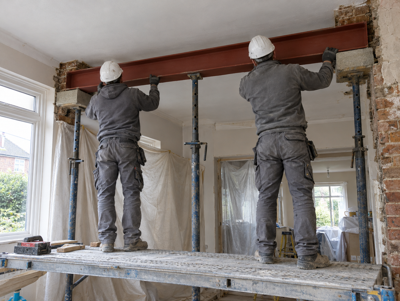
RSJ installation
Supply and fit of RSJs and steel beams made to the engineer's design, delivered, lifted in and packed to bear.
From £800Learn more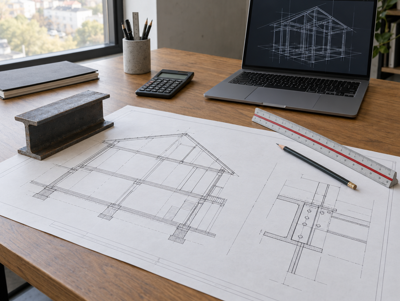
Structural calculations
Engineer's calculations and drawings for your beam, padstones and propping, ready for building control.
From £250Learn more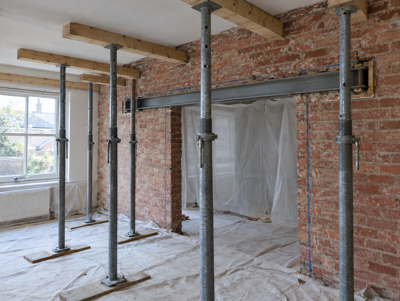
Temporary works & propping
Props, needles and spreaders that hold the building up safely while walls come out and steel goes in.
From £150Learn more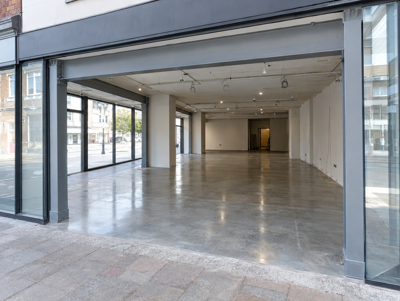
Shop & commercial openings
Steelwork for joining units, widening shopfronts and opening up floor space in small commercial premises.
From £5,000Learn more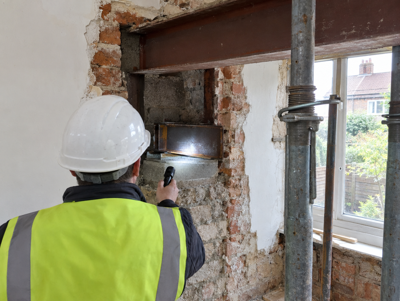
Building control sign-off
Applications, inspections and the completion certificate for your steel beam work, handled from start to finish.
From £250Learn more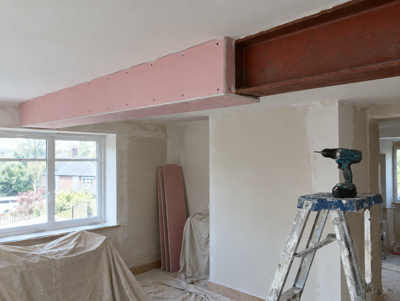
Fire protection for steel beams
Fire-rated boarding or intumescent coating for structural steel, to the fire resistance building control requires.
From £150Learn moreWhere do we offer steel beam replacement & repair?
Choose your county, council area or region for local details, building control contacts and guide prices.
England
- Bedfordshire
- Berkshire
- Bristol
- Buckinghamshire
- Cambridgeshire
- Cheshire
- Cornwall
- County Durham
- Cumbria
- Derbyshire
- Devon
- Dorset
- East Riding of Yorkshire
- East Sussex
- Essex
- Gloucestershire
- Greater Manchester
- Hampshire
- Herefordshire
- Hertfordshire
- Isle of Wight
- Kent
- Lancashire
- Leicestershire
- Lincolnshire
- London
- Merseyside
- Norfolk
- North Yorkshire
- Northamptonshire
- Northumberland
- Nottinghamshire
- Oxfordshire
- Rutland
- Shropshire
- Somerset
- South Yorkshire
- Staffordshire
- Suffolk
- Surrey
- Tyne and Wear
- Warwickshire
- West Midlands
- West Sussex
- West Yorkshire
- Wiltshire
- Worcestershire
Wales
- Anglesey
- Blaenau Gwent
- Bridgend
- Caerphilly
- Cardiff
- Carmarthenshire
- Ceredigion
- Conwy
- Denbighshire
- Flintshire
- Gwynedd
- Merthyr Tydfil
- Monmouthshire
- Neath Port Talbot
- Newport
- Pembrokeshire
- Powys
- Rhondda Cynon Taf
- Swansea
- Torfaen
- Vale of Glamorgan
- Wrexham
Scotland
- Aberdeen
- Aberdeenshire
- Angus
- Argyll and Bute
- Clackmannanshire
- Dumfries and Galloway
- Dundee
- East Ayrshire
- East Dunbartonshire
- East Lothian
- East Renfrewshire
- Edinburgh
- Falkirk
- Fife
- Glasgow
- Highlands
- Inverclyde
- Midlothian
- Moray
- North Ayrshire
- North Lanarkshire
- Perth and Kinross
- Renfrewshire
- Scottish Borders
- South Ayrshire
- South Lanarkshire
- Stirling
- West Dunbartonshire
- West Lothian
Northern Ireland