
Site works & commercial
Plastering & making good
Box, bead and skim new steelwork and repair ceilings, walls and floors so rooms are ready to decorate.
- Free survey visit and itemised written quote
- Coordinated with the structural work and inspections
- Typically 2–4 days after the structural work, plus drying time before painting
- Free survey visit
- Engineer's calculations arranged
- Building control handled
- Fixed written price once scope is agreed
- England, Wales, mainland Scotland & NI
What is plastering & making good?
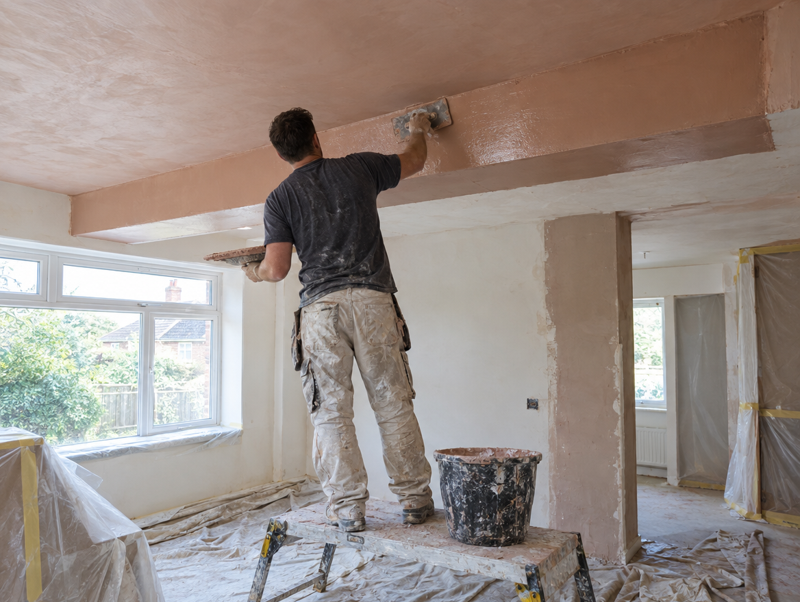
Plastering and making good is the finishing work after a beam goes in or a wall comes out: boxing the steel, fixing corner beads, patching ceilings and wall ends, infilling the floor where the wall stood and skimming everything smooth. The aim is a room that looks as if the opening was always there, ready for paint.
Structural work leaves a trail behind it: a steel beam to hide, ragged wall ends, a strip of missing floor, cracked ceiling where props stood and holes where needles passed through. However good the steel, this is the part you look at every day, so it deserves the same care as the structure.
We make good as the final stage of our structural jobs, and can quote it separately where another firm has fitted the steel. It covers boxing and fire boarding, plastering and skimming, floor infills and skirting, leaving smooth, dry surfaces for your decorator.
When is it needed?
- Boxing in and finishing a newly fitted steel beam
- Repairing ceilings and walls after a knock-through
- Infilling the floor strip where a wall has been removed
- Matching old lath-and-plaster or textured ceilings
- Finishing reveals and wall ends around a new opening
- Timing
- Typically 2–4 days after the structural work, plus drying time before painting
- Building control
- Part of the wider job
- Party wall
- Rarely needed
- Guide price
- £300–£1,200
Our process
How is plastering & making good carried out?
Agree the finish
We confirm how the beam will be finished, whether boxed as a small downstand or flush, and whether ceilings are to be patched or fully overboarded. Textured or period finishes are noted.
Box and board
A light frame is fixed around the steel and fire-rated plasterboard applied as specified. Exposed edges get metal corner beads so the lines stay straight and resist knocks.
Repair walls and ceilings
Wall ends are squared up, needle holes filled, and damaged ceiling areas cut back to the joists and reboarded. Cracks caused by the work are raked out and taped rather than just filled.
Infill the floor
The strip where the wall stood is built up to match the floor either side, with joists and boards on suspended floors or a screed on solid ones, levelled to sit flush.
Skim and dry
Boarded and patched areas get a skim coat for a smooth, even surface. The plaster is left to dry fully, with the room kept warm and ventilated to help it along.
Trims and handover
Skirting is extended or replaced to run through, door linings and architraves are refitted where openings changed, and the area is cleaned down ready for painting.
Before you start
What should I know about plastering & making good?
- Making good is easy to underestimate when budgeting. Removing a wall disturbs the ceiling, both wall ends and the floor, and props and needles leave their own marks, so the finishing work usually covers far more than the opening itself.
- A boxed beam usually leaves a downstand below the ceiling line. Where a flat ceiling is wanted, the beam has to be set up into the floor void during installation, so the finish needs deciding before the steel goes in, not after.
- Fire-rated plasterboard is used for boxing steel that needs fire protection, while standard or moisture-resistant board suits ordinary ceiling and wall repairs. Using the right board in each place avoids rework when building control inspects.
- Metal angle beads on every outside corner of the boxing give crisp, straight lines and protect the edges from knocks. They are set true to the ceiling and walls, so a slightly out-of-level beam does not show once skimmed.
- Victorian and Edwardian ceilings are often lath and lime plaster, which can sag or come away when nearby work shakes it. Small areas can be patched to match, while larger damaged areas are usually overboarded or replaced for a sound result.
- Textured ceiling coatings applied before 2000 can contain asbestos. Before a textured ceiling is cut, scraped or sanded, a sample is tested or an asbestos survey of the area is arranged, and the finish is only disturbed once the result is known.
- Fresh plaster has to dry before it is painted. A thin skim over board in a warm, ventilated room often dries within a few days to a week, while backing coats and deeper repairs take longer. Painting too soon can cause peeling and patchy colour.
- When a wall is removed, a strip of floor goes with it. On suspended timber floors the gap is joisted and boarded, and on solid floors it is filled and screeded. Either way, the infill must sit level so new flooring does not show a ridge.
- Period cornicing and ceiling roses can often be repaired or run to match the existing profile. Where a wall is removed between two rooms with cornice, the ends are usually returned neatly along the new beam so the detail looks intentional.
- Making good is the last chance to route cables neatly before surfaces close up. Sockets, switches and lights moved for the new layout are first-fixed before boarding, and pipes crossing the old wall line can run within the floor infill.
- Plastering itself is wet rather than dusty, but cutting back old plaster and sanding filler is not. Work areas are sheeted off, floors protected and dust extraction used when cutting, so the mess stays in the room being worked on.
- Hairline cracks sometimes appear along board joints or where new plaster meets old, as the building settles onto the steel and the plaster dries out. They are normal in the first months and are usually filled at the next redecoration.
- The cost depends mainly on the area to repair, the condition of the ceilings, whether period details need matching, and the size of the floor infill. Overboarding a badly damaged ceiling can work out more economical than patching it piece by piece.
- New plaster is very absorbent, so the first coat of emulsion is normally thinned with water as a mist coat to seal it. Skipping this step is a frequent reason paint flakes off fresh plaster within weeks of decorating.
Costs
How much does plastering & making good cost?
| Job | Typical guide range | What it usually covers |
|---|---|---|
| Plastering and making good | £300–£1,200 | Boxing the beam, bead and skim, reveals, floor infill where the wall stood and tidy-up |
Rounded guide ranges including VAT, from published UK cost guides (mainly 2024–2026) and our own costings. Your fixed price follows a survey and the engineer's calculations. Sources and notes.
What changes the price?
- Area of ceiling and wall to repair or reboard
- Size of the boxing and the fire-rated board layers
- Condition of existing ceilings, including lath and plaster
- Matching textured finishes, cornicing or period details
- Size and type of floor infill
- Skirting, door linings and other trims to refit
Approvals
What approvals does plastering & making good need in each nation?
Plastering & making good on its own does not need approval, but the structural work it supports usually does, through council building control or a registered approver.
England rulesNo separate approval for this element, but the related structural work goes through Welsh building control.
Wales rulesNo separate warrant for this element, but the structural work it goes with normally needs a building warrant first. There is no Party Wall Act; title deeds and, for flats, the Tenements (Scotland) Act 2004 apply.
Scotland rulesNo separate approval for this element, but the related structural work needs council building control approval. Northern Ireland has no Party Wall Act; title deeds and the general law apply.
Northern Ireland rulesPlastering & making good questions
Is plastering included when a load-bearing wall is removed?
Yes, on our structural jobs making good is priced as part of the work and itemised on the written quote, so you can see exactly what is included. If another firm is doing the steelwork, check their quote closely, as some stop at the beam and leave plastering, floor infill and skirting for you to arrange.
How long after a knock-through can I decorate?
Once the new plaster has dried right through, which for a thin skim in a warm, ventilated room is often a few days to a week. Deeper repairs and backing coats take longer. Plaster turns from dark to an even pale colour when it is dry, and painting before then risks poor adhesion.
How do you hide a steel beam in the ceiling?
Most beams are boxed with fire-rated plasterboard fixed to a light frame, then finished with corner beads and a skim coat so they read as part of the ceiling. If you want no downstand at all, the beam has to be set into the floor void when it is installed, which is decided at the design stage.
Can you match my old textured ceiling?
Often, yes, although a perfect match is hard over large patches. Before anything is touched, a textured coating applied before 2000 is tested for asbestos. Small areas can then be re-textured to blend in, while many people choose to skim the whole ceiling flat for a cleaner, consistent finish.
What happens to the floor where the wall was removed?
The gap left by the wall is filled to match the floor on either side. Suspended timber floors get new joists and boards, solid floors are filled and screeded, and the infill is levelled so carpet, laminate or tiles can run straight across the room without a visible ridge.
Will cracks appear after plastering?
Small hairline cracks can appear in the first months as the plaster dries and the building settles onto the new steel. They are cosmetic and normal, and are usually filled when you next repaint. Wide or growing cracks are different and should be reported, as they can point to movement that needs checking.
Can you repair a lath and plaster ceiling?
Yes. Small areas can be patched with lath and lime-based plaster, or with board cut in and skimmed to match. Where large areas have sagged or pulled away from the laths, overboarding or replacing the ceiling is often the sounder repair. We assess the condition at the survey and price the right approach.
Do you replace skirting boards and door frames after a knock-through?
Yes, where the work affects them. Skirting is extended or replaced so it runs through the new opening, and door linings and architraves are refitted or replaced where an opening has changed. Where period mouldings are involved, matching profiles can usually be sourced or made up to suit.
Do I need building control approval for plastering?
Not for plastering on its own. However, where it covers new structural steel, building control usually needs to inspect the beam and its fire protection before it is boxed in and skimmed. That is why, on structural jobs, the making good is timed around the building control visit.
Do you decorate after making good?
Not usually. Making good leaves surfaces skimmed, dry and ready for paint, with trims refitted, and decoration is normally left to you or your decorator so you can choose colours and finishes yourself. Whoever paints should start with a thinned mist coat on the new plaster before the main coats.
Related services
Load-bearing wall removal
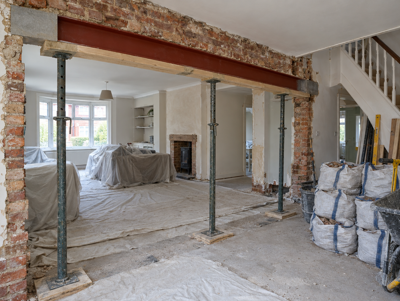
Take out a structural wall and carry the load on a new steel beam, with calculations and sign-off arranged.
From £2,000Learn more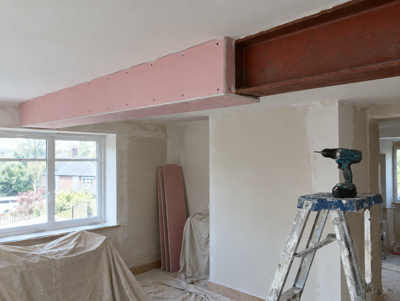
Fire protection for steel beams
Fire-rated boarding or intumescent coating for structural steel, to the fire resistance building control requires.
From £150Learn more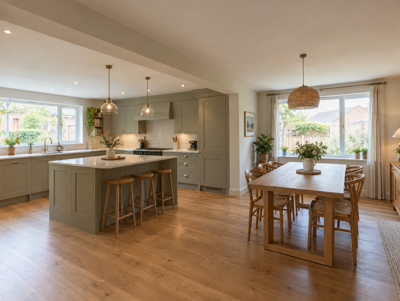
Kitchen-diner knock-throughs
Open a kitchen and dining room into one space on a steel beam, with services, approvals and finishing planned.
From £2,500Learn more
Through-lounge knock-throughs
Join front and back reception rooms into one through-lounge, with steel, approvals and period finishes handled.
From £2,500Learn more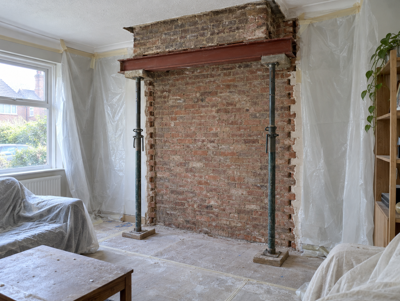
Chimney breast removal
Remove a chimney breast to gain floor space, with anything left above supported to the engineer's design.
From £1,500Learn moreWhere do we offer plastering & making good?
Choose your county, council area or region for local details, building control contacts and guide prices.
England
- Bedfordshire
- Berkshire
- Bristol
- Buckinghamshire
- Cambridgeshire
- Cheshire
- Cornwall
- County Durham
- Cumbria
- Derbyshire
- Devon
- Dorset
- East Riding of Yorkshire
- East Sussex
- Essex
- Gloucestershire
- Greater Manchester
- Hampshire
- Herefordshire
- Hertfordshire
- Isle of Wight
- Kent
- Lancashire
- Leicestershire
- Lincolnshire
- London
- Merseyside
- Norfolk
- North Yorkshire
- Northamptonshire
- Northumberland
- Nottinghamshire
- Oxfordshire
- Rutland
- Shropshire
- Somerset
- South Yorkshire
- Staffordshire
- Suffolk
- Surrey
- Tyne and Wear
- Warwickshire
- West Midlands
- West Sussex
- West Yorkshire
- Wiltshire
- Worcestershire
Wales
- Anglesey
- Blaenau Gwent
- Bridgend
- Caerphilly
- Cardiff
- Carmarthenshire
- Ceredigion
- Conwy
- Denbighshire
- Flintshire
- Gwynedd
- Merthyr Tydfil
- Monmouthshire
- Neath Port Talbot
- Newport
- Pembrokeshire
- Powys
- Rhondda Cynon Taf
- Swansea
- Torfaen
- Vale of Glamorgan
- Wrexham
Scotland
- Aberdeen
- Aberdeenshire
- Angus
- Argyll and Bute
- Clackmannanshire
- Dumfries and Galloway
- Dundee
- East Ayrshire
- East Dunbartonshire
- East Lothian
- East Renfrewshire
- Edinburgh
- Falkirk
- Fife
- Glasgow
- Highlands
- Inverclyde
- Midlothian
- Moray
- North Ayrshire
- North Lanarkshire
- Perth and Kinross
- Renfrewshire
- Scottish Borders
- South Ayrshire
- South Lanarkshire
- Stirling
- West Dunbartonshire
- West Lothian
Northern Ireland