
Service group
Wall removal & knock-throughs
Taking out load-bearing walls, opening kitchens and reception rooms into one space, and removing chimney breasts, with the steel sized by an engineer.
- Free survey visit
- Engineer's calculations arranged
- Building control handled
- Fixed written price once scope is agreed
- England, Wales, mainland Scotland & NI
Wall removal and knock-through services
Removing an internal wall is the most common reason people need a steel beam. The beam picks up the floors, walls or roof the wall used to carry, and padstones or posts take the load down. Every job here includes temporary propping and inspection before anything is covered.
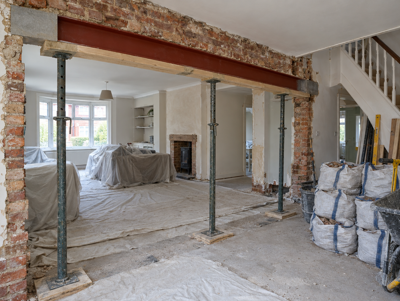
Load-bearing wall removal
Take out a structural wall and carry the load on a new steel beam, with calculations and sign-off arranged.
From £2,000Learn more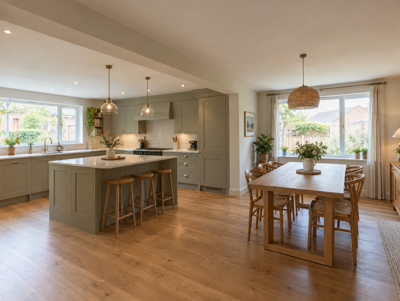
Kitchen-diner knock-throughs
Open a kitchen and dining room into one space on a steel beam, with services, approvals and finishing planned.
From £2,500Learn more
Through-lounge knock-throughs
Join front and back reception rooms into one through-lounge, with steel, approvals and period finishes handled.
From £2,500Learn more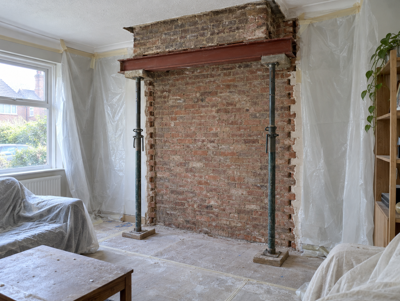
Chimney breast removal
Remove a chimney breast to gain floor space, with anything left above supported to the engineer's design.
From £1,500Learn moreWall removal & knock-throughs: common questions
Is it safe to remove a load-bearing wall?
Yes, when it is designed by a structural engineer, approved by building control and carried out with proper temporary support. The risk comes from guessing the steel size or removing the wall without props, which is why we never do either.
Can every load-bearing wall be removed?
Most can, but some walls carry so much that the engineer specifies a large beam, posts or new foundations. The survey and calculations tell you what is involved before you commit.
What about the chimney breast upstairs?
If the ground-floor breast is removed, what remains above must be supported, usually on a steel beam or, where building control accepts it, steel brackets. The engineer decides which suits the stack.