Fire protection for steel beams · Paisley
Fire protection for steel beams in Paisley
Steelwork, approvals and making good for fire protection for steel beams in Paisley and nearby.
- Price fixed in writing once scope is agreed
- Building warrant arranged
- Temporary works and making good included
- Free survey visit
- Engineer's calculations arranged
- Building control handled
- Fixed written price once scope is agreed
- England, Wales, mainland Scotland & NI
About our fire protection for steel beams service in Paisley
If you live in Paisley, fire protection for steel beams can usually be planned and priced after a single survey visit. The wider Renfrewshire area is covered as well. We cover PA1, PA2, PA3 and PA5, and we fix the price in writing once the layout and scope are agreed.
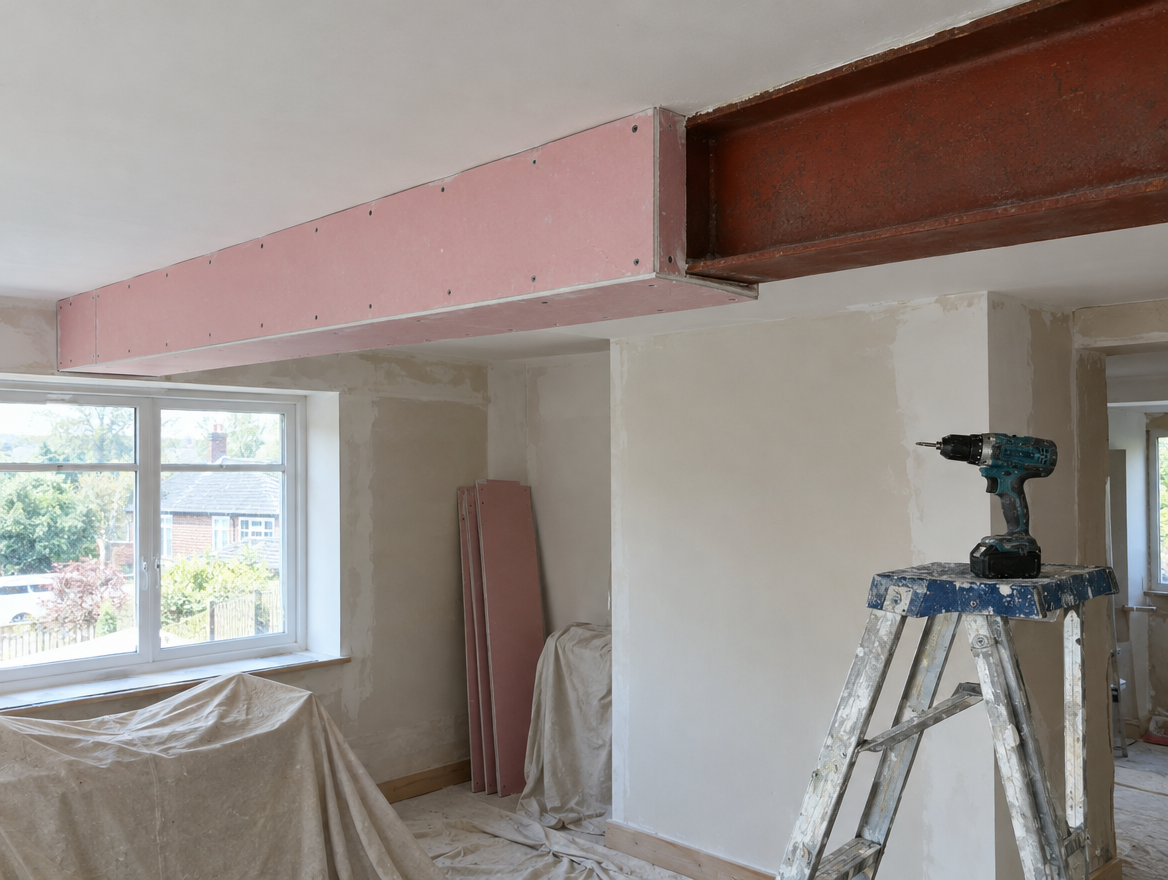
We fit fire protection alongside new steelwork, and as a standalone job where steel was installed without it or building standards has asked for more. That covers boxing with fire-rated plasterboard, intumescent coatings for steel left on show, and the records building standards needs to see before signing the work off.
What to expect
- The fire resistance needed depends on the building and where the steel sits. In a typical two-storey house, elements of structure commonly need 30 minutes, but taller homes, flats and commercial premises can need more. The engineer and building standards confirm the figure.
- Boxing a single beam usually takes around a day, plus skimming and drying. Intumescent coatings need each coat to dry before the next goes on, so they can take several days depending on the thickness required and the room temperature.
- Intumescent paint looks like an ordinary coating but swells into a thick insulating char when heated. How well it performs depends on the dry film thickness, which varies with the steel section and fire period, so it is applied to a written specification.
- Boarding is fairly clean work, but coatings need a clean, dry and well-ventilated room at a suitable temperature. Dust from other trades can spoil the surface, so painting is normally scheduled once the messy work in that room is finished.
- Fire-rated plasterboard is denser than standard board and contains additives that slow the passage of heat. It usually has a pink or red face, and the number of layers and fixing pattern come from the system specification rather than being decided on site.
From survey to sign-off in Paisley
Survey in Paisley
We visit, look at the wall and what sits above it, measure the opening and note services, access and how the steel can be brought in.
Engineer's design
A structural engineer sizes the beam, padstones and any posts, and sets out the temporary support needed while the wall is out.
Building warrant
A building warrant is applied for from Renfrewshire Council, and work starts only once the warrant has been granted.
Install and sign-off
Props go in, the opening is formed, the steel is set and packed, building standards inspects it, and we make good.
What does fire protection for steel beams cost in Paisley?
As a guide, budget £140–£550 per beam including VAT for fire protection to a steel beam in Paisley, based on published UK cost guides adjusted for prices in Scotland (-9%).
| Job | Typical guide range | What it usually covers |
|---|---|---|
| Fire protection to a steel beam | £140–£550 per beam | Fire-rated board boxing or an intumescent coating system as specified |
| Steel column or post | £460–£1,360 per column | Column supplied and fitted with base and cap plates on a pad foundation |
| Steel beam replacement | £1,800–£5,000 | Propping, removing the failed beam, new steel on proper bearings, approval and making good |
| Plastering and making good | £270–£1,090 | Boxing the beam, bead and skim, reveals, floor infill where the wall stood and tidy-up |
Figures include our approximate regional adjustment for prices in Scotland (-9%) and are rounded. How these figures are worked out.
Building rules for Paisley
In Scotland, structural alterations need a building warrant under the Building (Scotland) Act 2003, and work must not start until the warrant is granted. For Paisley, warrants are handled by Renfrewshire Council's building standards service. When the work is finished, a completion certificate is submitted and has to be accepted by the council.
There is no party wall notice system in Scotland. Instead, check your title deeds and, for flats, the tenement management scheme, and talk to neighbours early if the beam bears into a shared wall.
Fire protection for steel beams in Paisley: your questions
Do you cover Paisley for fire protection for steel beams?
Yes. We carry out fire protection for steel beams in Paisley and the PA1, PA2, PA3 and PA5 postcode districts. Book a free survey visit and we will check the wall, arrange the engineer's calculations and send an itemised written quote.
Who approves fire protection for steel beams in Paisley?
Structural work in Paisley needs a building warrant from Renfrewshire Council, granted before work starts. We prepare and submit it with the structural engineer's calculations and arrange the inspections, so the completion paperwork follows the job.
How long does intumescent paint take to apply?
Several days in most cases. Each coat has to dry before the next is applied, and the number of coats depends on the thickness needed. Cold or damp rooms slow drying, so the space is kept warm and ventilated, and the top coat goes on once the full build has been measured.
Does a steel column need fire protection as well as the beam?
Usually, if the column is part of the load path. A column carrying a beam is just as important in a fire, so it normally needs the same fire resistance. Columns are often boxed with board or coated with intumescent paint, and the engineer's design and building standards confirm what applies to yours.
How thick does intumescent paint need to be on a steel beam?
There is no single figure. The thickness depends on the steel section, how many sides are exposed and the fire period required, and the coating manufacturer's data sets the dry film thickness for each case. The applied thickness is measured with a gauge once the coats have dried and recorded for building standards.