If a wall was removed without approval, the first concern is safety, so an engineer should check the beam and its bearings. Next comes the paperwork. In England, a local authority can issue a regularisation certificate for unauthorised work done since 11 November 1985, and Northern Ireland has regularisation too. In Scotland, a completion certificate can be submitted without a warrant, at a higher fee.
What should I do first if a wall was removed without approval?
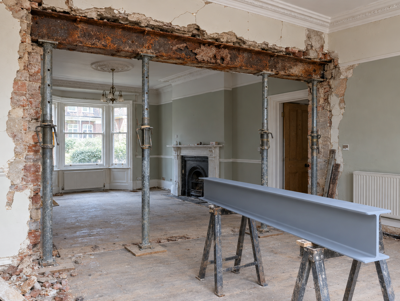
Start with safety. Look for signs that the structure is struggling: cracks above or beside the opening, sagging ceilings or floors upstairs, doors that have started to stick, or a beam that looks small, poorly supported at one end or packed up on loose materials. If you see any of these, have the area propped by someone competent and ask an engineer to look at it promptly.
Then gather whatever information exists. Ask the previous owner or the builder for calculations, receipts or emails, and check with the council whether any application was ever made. Sometimes approval was obtained but the certificate was never issued or has been lost, which is usually far simpler to resolve than work that was never notified at all.
How does regularisation work in England?
Regulation 18 of the Building Regulations 2010 provides for regularisation of unauthorised work carried out on or after 11 November 1985. You apply to the local authority, which can require the work to be laid open for inspection, for example by removing plaster or boxing so the steel and its bearings can be seen. GOV.UK says only local authorities offer regularisation, so a registered building control approver cannot provide it.
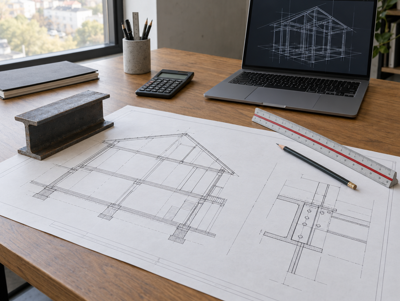
Expect to supply structural calculations showing the beam is adequate. If it falls short, the work must be altered or strengthened before a certificate is issued. Fees are set by each council: the London Borough of Enfield's 2026/27 charges table lists £571.25 for regularising a load-bearing wall removal, against £457 including VAT for applying beforehand, though its guidance notes describe the calculation differently, so confirm the current figure with the council.
What are the options in Wales, Scotland and Northern Ireland?
Wales has its own version of the Building Regulations, and its system for new work changed on 1 July 2026. Ask the council's building control team how it will deal with your particular case before assuming the English process applies. In Northern Ireland, regularisation certificates are available under regulation 13 of the 2012 regulations, and Belfast City Council lists £72 for regularising other domestic work with an estimated cost of up to £2,000.
Scotland works differently. Doing work without a warrant is an offence under section 8 of the Building (Scotland) Act 2003. If work is still under way, a late warrant application can be made at any time before the works on site are complete, at 200% of the normal fee, and the standards in force at the time of that application are used. Where the work is finished, a completion certificate can be submitted without a warrant, at 300% of the fee.
What will the inspector want to see?
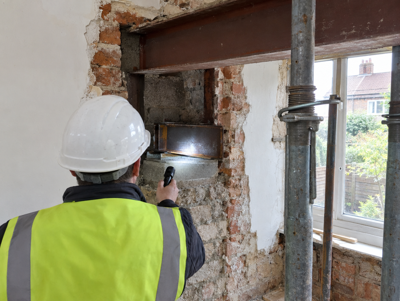
Retrospective approval works backwards from a finished job, so the inspector needs evidence of what is hidden. Typically that means exposing each end of the beam to show the bearings and padstones, revealing enough steel to confirm its size, and checking the packing beneath it. Fire protection is considered too, because a beam boxed in ordinary board may not meet the requirements.
An engineer can often establish the beam size and loads from a small amount of opening up, which keeps damage to finishes down. Where the steel or the bearings fall short, the engineer designs a fix, such as new padstones, a column, strengthening or a replacement beam. We can carry out the opening up, any remedial work and the making good, and our steel beam replacement page covers replacing inadequate steel.
Will an unapproved wall removal affect selling my home?
It can. Buyers' solicitors commonly ask for building regulations paperwork for structural alterations, and a surveyor may notice a wide opening with no record behind it. Missing approval can delay a sale, lead to a lower offer, or prompt a buyer to ask for retrospective approval before completing. Sorting it out before you put the property on the market usually leaves you more in control of the timing.
If you are buying a home where a wall has gone without approval, raise questions early. An engineer's report on the opening tells you whether there is a structural problem, and a quote for any remedial work helps with negotiation. Your solicitor can advise on the legal options; we can handle the practical side, from calculations and opening up to remedial steel and building control sign-off.
How much does it cost to put right?
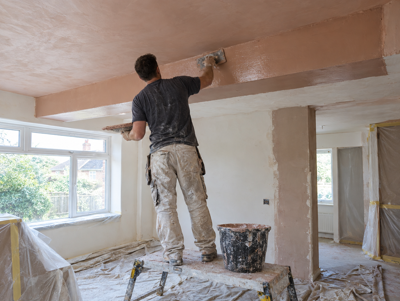
Costs depend on what the investigation finds. If the existing steel is adequate, the work may amount to calculations, the regularisation or late application fee, some opening up and making good. Our guide range is £250 to £750 for structural calculations and £300 to £1,200 for plastering and making good, both including VAT. Retrospective fees tend to be higher than applying in advance, as the Enfield and Scottish figures above show.
If the beam is undersized or poorly supported, the cost moves closer to a new installation. Our guide range for steel beam replacement is £2,000 to £5,500 including VAT, covering propping, removing the failed beam, new steel on proper bearings, approval and making good. A free survey visit and an itemised written quote set out exactly what your case needs.
Last checked 1 November 2026.