The structural work on site for a typical single beam usually takes a few working days: propping, removing the wall, and fitting and packing the steel. The whole project runs longer, because calculations, building control or a warrant, any party wall notice, and plastering come before or after. A party structure notice alone needs at least two months' warning in England and Wales.
What are the stages of a steel beam project?
Most of the elapsed time passes before anyone picks up a tool. A typical sequence looks like this, although stages often overlap and some jobs skip one or two of them.
- Survey visit and itemised written quote
- Structural calculations and drawings from the engineer
- Building control application or notice, or a building warrant in Scotland
- Party wall notices in England and Wales where a shared wall is affected
- Steel ordered, cut to length and delivered
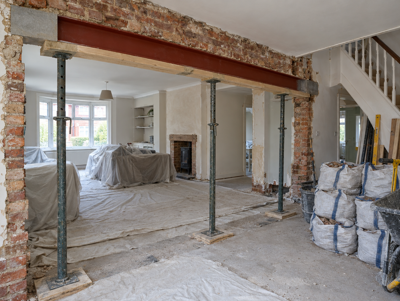
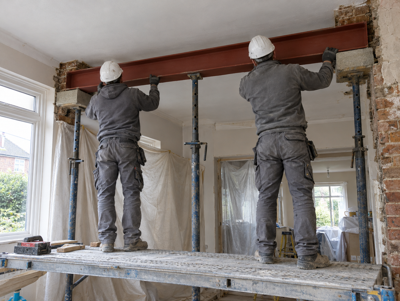
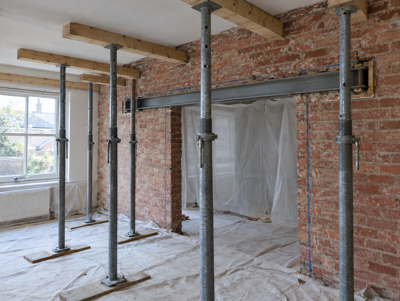
- Propping, wall removal, steel fitted and packed, then inspected
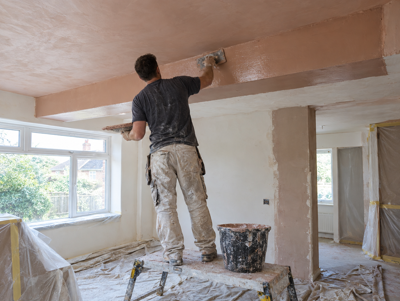
- Fire protection, plastering, drying out and decoration
Planning each stage early lets the slower ones, such as notices and approvals, run alongside design and ordering instead of one after another. The sections below explain how long each stage commonly takes and what tends to hold it up.
How long do calculations and approvals take?
Calculation turnaround depends on the engineer's workload and how complicated the job is, so we confirm timings when we book them rather than promising a figure in advance. Approval time depends on the route. In England, GOV.UK says a full plans application should be decided within 5 weeks, or 2 months if you agree, while work under a building notice can begin 2 days after it is submitted, without formal approval of the plans.
Scotland requires a building warrant for structural alterations, so the warrant process needs to be complete before the wall comes out and should sit early in your programme. In Wales, applications made since 1 July 2026 follow the new application-based system, and the start of work must be notified. In Northern Ireland, the application goes to council building control before work begins, by full plans or, for an existing single dwelling, a building notice.
Can party wall notices delay the start?
They can if they are left late. In England and Wales, a party structure notice must be served at least two months before the work starts, unless the neighbour consents in writing. Where the neighbour does not reply within 14 days, a dispute is deemed to have arisen, and surveyors then need to be appointed and agree an award, which can add further weeks to the timetable.
Serving notice as soon as the engineer's design shows how the beam bears into the party wall usually keeps things on track. Notices for excavating near a neighbour's building, which can apply to pad foundations for columns close to the boundary, need at least one month. The Act does not extend to Scotland or Northern Ireland, where title deeds and the general law govern shared walls instead.
How many days will the work take on site?
For a typical internal wall, the structural part is usually a matter of a few working days. MyJobQuote's 2026 guide to removing a load-bearing wall suggests roughly one to three days depending on the size of the opening, from a single doorway width to a large open-plan knock-through. For chimney breasts, its separate guide puts a ground-floor-only removal at about one and a half to two days, and an entire breast with its stack at three to four.
Jobs take longer when an opening needs a goalpost frame or columns on new pad foundations, when several steels connect together, when steel has to be lifted into a loft, or when an older house hides defects that only show once the wall is opened. Weather matters for openings in external walls. Your quote sets out the expected time on site for your particular job.
What happens on each day on site?
A straightforward single-beam job often follows a pattern like the one below, though every house differs and some steps take longer than a day.
- Protect floors, screen the work area and set up props, spreaders and any needles
- Cut out the wall in stages and prepare the bearings at each end
- Bed the padstones, lift the beam into place and pack it tight
- Let building control inspect the steel and bearings before anything is covered
- Strike the props once the steel is carrying, then fix fire protection and begin making good
Mortar and dry pack beneath the beam need time to gain strength before the props come out, so the engineer's details or the installer's method decide the timing. Plastering follows, and new plaster needs a few days to dry before it is decorated.
How long until the job is finished and signed off?
Fire protection boxing usually goes up soon after the steel has been inspected, followed by skimming. Exposed steel with a fire-protective coating needs longer, as every layer has to dry before the next one goes on. Floor infill where the wall stood, new skirting and any services that were moved are then completed.
The final inspection comes once everything is done. For English projects, GOV.UK gives 8 weeks as the usual limit for the completion certificate to arrive. Under the Welsh rules that apply to work started from July 2026, Gwynedd Council's summary says a signed compliance statement is due within 5 days of completion. Scottish jobs close with a completion certificate sent to the verifier. Store the certificate with your house documents once it arrives, as it will be asked for when you sell.
Last checked 1 November 2026.