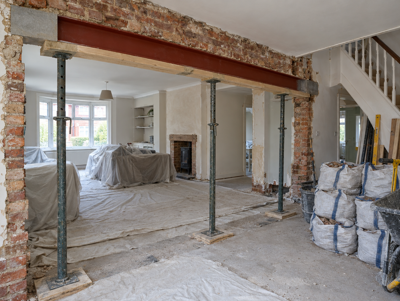
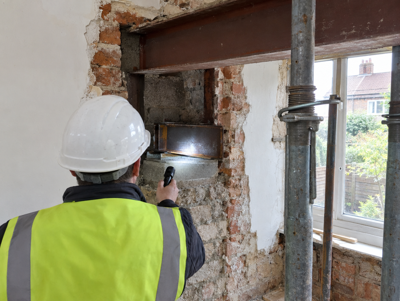
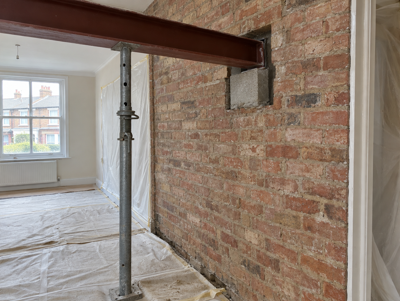
Removing a load-bearing wall is controlled building work in every UK nation. In England it is a material alteration needing building control approval by building notice or full plans. Wales has used an application-based system for new work since 1 July 2026, Scotland needs a building warrant before work starts, and Northern Ireland needs an application to council building control.
Why does removing a load-bearing wall need approval?
In England, the Building Regulations 2010 treat 'the material alteration of a building' as building work. Under regulation 3, an alteration is material if it would leave the building failing a requirement it previously met, and Part A, which covers structure, is one of those requirements. Take out a wall that holds up a floor and the building must still carry its loads safely, so the change falls squarely within the regulations.
Part A's central requirement is that the combined dead, imposed and wind loads are sustained and passed to the ground safely, without deflection, deformation or ground movement that would impair the stability of another building. A replacement beam sized by an engineer and checked by building control is how a project shows it meets that test. Part B also applies, because the structure must keep its stability for a reasonable period in a fire.
What is the approval process in England?
You can use the council's building control service or a registered building control approver; private approvers must be registered with the Building Safety Regulator. With the council there are two routes. A full plans application has the design checked first, and GOV.UK says a decision is due within 5 weeks, or 2 months with your consent. A building notice is meant for smaller projects and lets work start 2 days after it is submitted, but the plans are not formally approved.
Since 1 October 2023 the regulations have also given duties to clients, designers and contractors. On a domestic job with one contractor, the client's duties fall to that contractor; with more than one, they normally fall to the principal contractor. No competent person scheme covers structural work, so building control has to be involved for every beam. Once the work is finished, a completion certificate usually follows within 8 weeks. Our England building rules page has more detail.
What changed in Wales on 1 July 2026?
Wales has its own version of the Building Regulations and its own Approved Documents for structure and fire. From 1 July 2026, the Building etc. (Amendment) (No. 2) (Wales) Regulations 2025 introduced dutyholder roles largely equivalent to England's, replaced the old deposit-of-plans system with an application-based one, and made notifying the start of work a requirement. An approval lapses if work has not commenced within 3 years.
Gwynedd Council's summary of the changes says householder projects need a client, principal designer and principal contractor appointed in writing, with a signed compliance statement due within 5 days of completion. A domestic client who considers themselves competent may take on certain client duties. Work started or approved before 1 July 2026 stays under the old rules. Because the system is new, confirm current requirements with your council or a registered approver on the Wales register. We make the application to building control under the Welsh regulations; see our Wales building rules page.
What is needed in Scotland?
Scotland uses building warrants rather than notices or plans approval. Section 8 of the Building (Scotland) Act 2003 requires a warrant for work covered by the building regulations, and alterations to elements of structure do not appear among the exempt minor works. Going ahead without one is an offence on the part of the builder, the person commissioning the work and the owner.
Applications for domestic work made from 6 April 2026 are judged against that month's edition of the domestic Technical Handbook, whose first section covers structure. Once the job is done, the relevant person sends a completion certificate to the verifier. We work across mainland Scotland, and our Scotland building rules page sets out the warrant process step by step.
How does it work in Northern Ireland?
The Building Regulations (Northern Ireland) 2012 define building work to include 'the structural alteration or extension of a building', so removing a load-bearing wall is covered. District councils run building control. Under regulation 9 you can make a full plans application or, for work to an existing single dwelling, give a building notice. A notice cannot be used for a new dwelling, a material change of use, a new storey covered by regulation 55, or work adding more than 10 square metres of floor area.
A building notice lapses if work has not started within 3 years. The structural requirement sits in Part D, which asks for loads to reach the ground safely without impairing the safety of another building, and fire guidance is in Technical Booklet E with its amendments. Work done without approval can be dealt with through a regularisation certificate. Our Northern Ireland building rules page covers the details.
Do I also need planning permission or other consents?
Planning permission is not usually needed. In every UK nation, works that affect only the interior of a building are not development, and the Planning Portal confirms you do not need planning permission to move internal walls. Building regulations approval is separate and still applies to structural work. Other consents may be needed, though.
- Listed buildings need listed building consent for alterations affecting their character, under each nation's own legislation
- In Northern Ireland, breaching listed building controls is an offence carrying up to 6 months' imprisonment and a fine of up to £100,000 on summary conviction
- Leasehold flats often need the landlord's written consent under the lease, and a landlord is not obliged to agree to changes to structural walls it retains
- In England and Wales, cutting into a party wall to take a beam end brings in the Party Wall etc. Act 1996
Notices and approvals are coordinated as described on our party wall beam works page.
Last checked 1 November 2026.