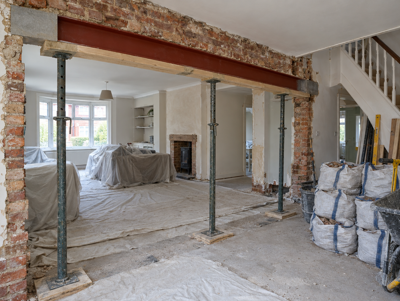
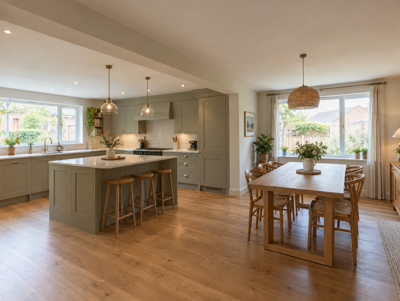
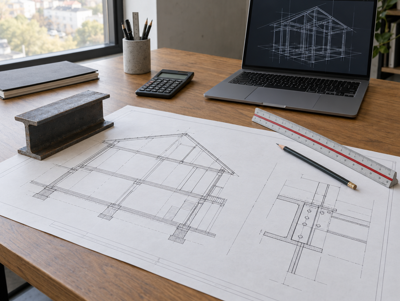
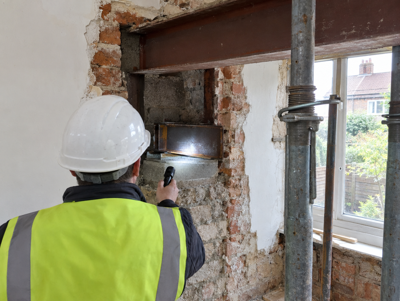
Removing a load-bearing wall with a steel beam typically costs £2,000 to £5,000 including VAT for an internal wall up to about 4 metres in a typical house. That covers structural calculations, building control, propping, the steel, padstones, fitting, fire protection and making good. Wider spans, heavier loads, flush beams and party wall work push the price higher.
What does removing a load-bearing wall usually cost?
For a typical internal wall up to about 4 metres, our guide range is £2,000 to £5,000 including VAT. That is an all-in figure covering structural calculations, building control, temporary propping, the steel, padstones, fitting, fire protection and making good. Related jobs fall into similar bands, shown below. Every figure is a rounded planning budget, not a quote for your home.
| Job | Guide range including VAT |
|---|---|
| Load-bearing wall removal with steel beam | £2,000 to £5,000 |
| Kitchen-diner knock-through | £2,500 to £6,000 |
| Through-lounge knock-through | £2,500 to £5,500 |
| Widening an internal doorway | £1,000 to £2,500 |
| Rear wall opening for bi-fold or sliding doors | £2,500 to £7,000 |
Our full price list covers every job type, with the published cost guides behind each range. Your own figure depends on the span, the loads above and the finish you choose, and is confirmed once the engineer's calculations are back.
What should a quote for wall removal include?
A clear quote splits the job into its parts, so you can see where the money goes and compare like with like. Some published prices cover only the beam and labour, while others include fees and finishing, which is why headline figures vary so much. MyBuilder's price guide, for example, gives £2,500 to £6,500 for full wall removal and RSJ installation but leaves out plastering and redecoration. These are the main lines to look for.
| Line item | Our guide range including VAT |
|---|---|
| Structural calculations for a beam | £250 to £750 |
| Building control fees | £250 to £650 |
| Temporary works and propping | £150 to £500 |
| RSJ supply and fit (single beam) | £800 to £2,500 per beam |
| Fire protection to a steel beam | £150 to £600 per beam |
| Plastering and making good | £300 to £1,200 |
Some of these lines overlap, so they do not simply add up to the all-in range. Our written quote is itemised in this way, and the price is fixed in writing once the layout, specification and scope are agreed.
What makes one wall cost more than another?
Span and load matter most. A wider opening needs a deeper or heavier beam, and a wall carrying a floor, a wall above and part of the roof needs more steel than one holding up a single floor. The engineer's calculations settle this, which is why two walls that look alike can be priced quite differently. Other common cost drivers include the following.
- A beam set flush within the ceiling rather than boxed below it
- Weak or uneven masonry at the beam ends, calling for columns or new pad foundations
- Steel that must come through a narrow hallway or up to an upper floor
- Radiators, cables, pipes or a gas supply running through the wall
- Textured or lath-and-plaster ceilings that are harder to patch neatly
- Party wall procedures where a beam bears into a shared wall
You can test how span, load and finish change the budget for your own job with our guide price tool.
How much are building control and other fees?
Building control charges are set by each council or registered building control approver, so they vary from place to place. As one example, the London Borough of Enfield's 2026/27 charge for removing a load-bearing wall was £457 including VAT, by full plans or building notice. Our general guide range is £250 to £650. In Scotland, warrant fees are set by law on the estimated value of the work, starting at £215 for work valued up to £5,000 from 1 April 2026.
Northern Ireland councils also charge on estimated cost: Belfast City Council's published table lists £150 for other domestic work with an estimated cost of £2,001 to £5,000. Where a beam bears into a party wall in England or Wales, a surveyor acting as agreed surveyor adds £900 to £2,000 per neighbour on our guide figures if the neighbour dissents; serving notice where the neighbour consents costs far less.
Homes built before 2000 may also need an asbestos refurbishment survey of the area being disturbed, which we budget at £300 to £600.
Does VAT or where I live change the price?
All our guide figures include VAT at the standard rate of 20%. HMRC's VAT Notice 708 says work to an existing building is normally standard-rated, so most wall removals in an occupied home carry the full rate. A reduced 5% rate can apply in particular cases, such as converting a building into a different number of dwellings, or renovating a home that nobody lived in for the two years before work starts. Evidence may be needed, so check with HMRC or your accountant before relying on it.
Labour and access costs also differ across the UK. London prices sit noticeably above our baseline, while jobs in Wales, Scotland and Northern Ireland tend to come in a little lower. Our guide price tool applies an approximate regional adjustment, so the figures you see reflect where the work will be done.
How can I keep the cost under control?
Most savings come from decisions made early rather than corners cut on site. Settling the opening size and finish before calculations are done avoids paying for the design twice. Choosing a beam boxed below the ceiling instead of a flush one usually saves joist work. Clearing the rooms, moving furniture and agreeing access in advance can shorten the time the team spends on site.
Watch out for false economies. Skipping the engineer or building control can look cheaper, but approval sought after the event tends to cost more and involve opening up finished work, and a missing completion certificate can cause problems when you sell. Having one team handle calculations, approval, propping, steel and making good also stops jobs falling between trades.
To get a firm figure, book a free survey visit and we will send an itemised written quote.
Last checked 1 November 2026.